
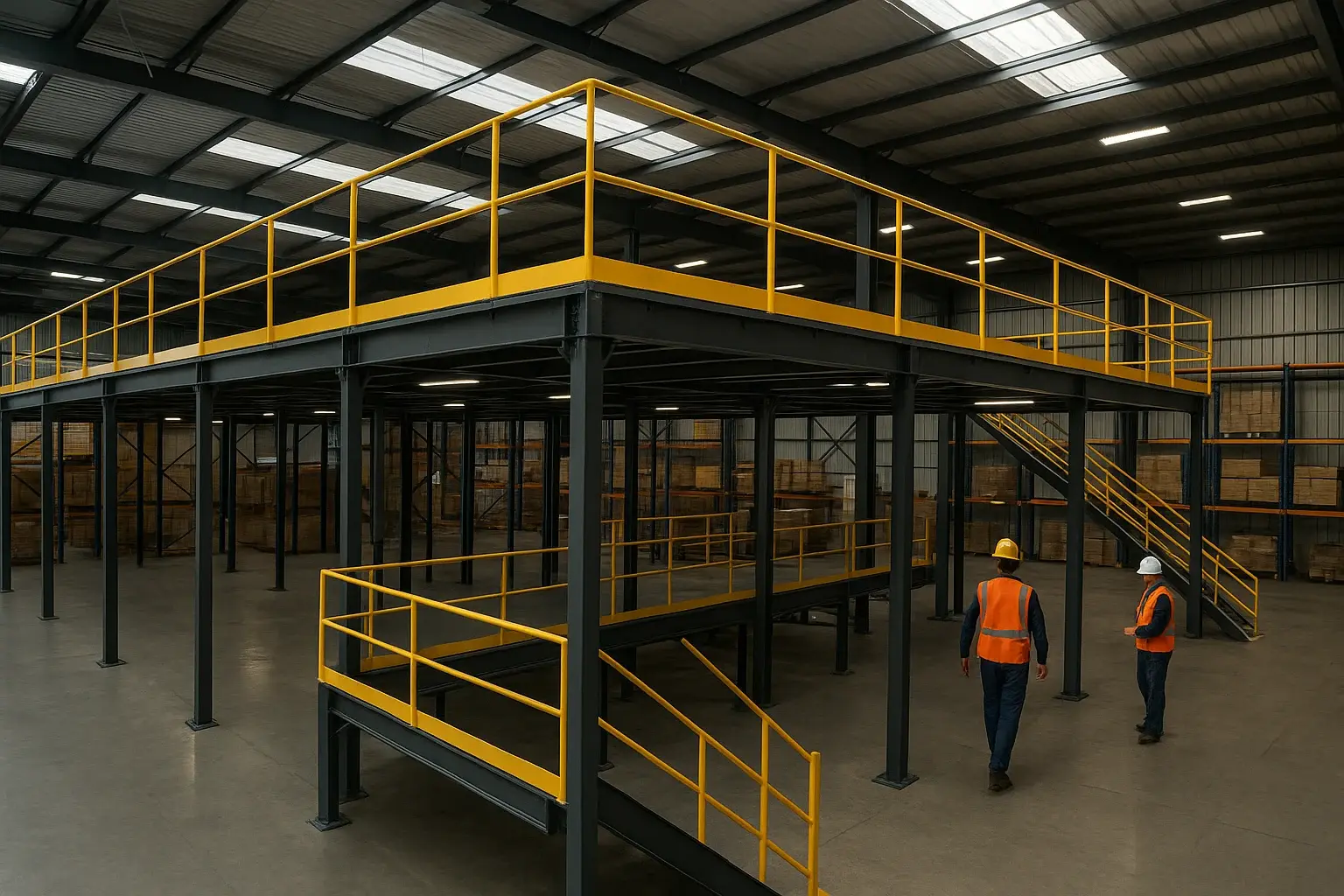
Every mezzanine ends at the same place: your concrete floor. The weight of the platform, the stock, the equipment and the people above is gathered into a small number of columns and delivered into the slab beneath them. That is why mezzanine slab and footing requirements are among the first things checked on any project, well before steel is ordered.
This guide explains how an existing slab is assessed, why point loads under columns matter so much, when footings are needed, and what your options are if the slab turns out not to be adequate.
Why the Slab Matters More Than Most People Expect
A warehouse slab is usually designed for loads spread across a wide area, such as pallets, vehicles and general use. A mezzanine changes that. It concentrates its load into columns, so each column base presses on a small area of concrete.
That is the difference between spread loading and point loading. A slab that copes well with forklifts and racking may still be stressed by a heavily loaded column base, particularly near joints, edges or cracks.
If the slab is not checked, you risk problems that appear slowly or suddenly:
- Cracking or punching under column bases
- Settlement or tilting of columns
- Floor movement that affects racking, machinery or doors
- Costly remedial work once the mezzanine is in service
Mezzanine Slab and Footing Requirements: What Gets Checked
Slab assessment is part of the engineering of your mezzanine. It is not a quick look. Your engineer considers:
- Slab thickness and reinforcement. Whether the concrete has the depth and reinforcement to carry concentrated loads.
- Concrete condition. Cracks, spalling, previous repairs and wear.
- Ground conditions. What the slab sits on, and any sign of movement.
- Joints and edges. Column bases near a joint or slab edge behave differently from those in the middle of a bay.
- Existing loads. Racking, machinery and forklift traffic already using the slab.
- Services. Drains, pits, trenches or buried services that affect where footings can go.
Where information is missing, such as unknown thickness or reinforcement, the engineer may recommend investigation before the design is finalised.
Point Loads Under Columns
Once the loads on the mezzanine are known, the engineer calculates how much force each column delivers to the floor. This column reaction is the figure the slab or footing has to be checked against.
Column reactions depend on:
- The floor area each column supports
- The use of the mezzanine, including racking and machinery
- Span lengths between columns
- Live loads from people and goods
- Any allowance for future loads
More columns spread the load among more points but take up more ground-level space. Fewer columns open the floor below but increase the load at each base. Getting that balance right depends on both your slab and your workflow below, which is why slab assessment and layout are done together.
For the wider engineering picture, see our article on what a mezzanine structural engineer does.
When Footings Are Needed
If the existing slab can carry the column loads, columns may be fixed to it with base plates. If it cannot, or the load is high, the design may call for footings: purpose-designed concrete pads or thickenings that spread the load over a larger area and into suitable ground.
Footing work generally involves:
- Cutting or removing sections of the existing slab
- Excavating and preparing the ground
- Placing reinforcement and pouring new concrete
- Allowing the concrete to cure before it is loaded
- Reinstating the slab around the new footing
These steps add to the programme, so it pays to know early whether they will be needed.
Footing details are specific to your site and loads. Your engineer will specify them, and your certifier will confirm what they need to see.
A real example
On our SI Retail project, the business had run out of storage space and was keeping goods outside under tarps. Because heavy steel pallets required high load capacity, we engineered a 1-tonne per square metre mezzanine with concrete foundations tied into the existing office stairs. The full story is on the SI Retail project page.
What Happens If the Slab Is Not Adequate?
An inadequate slab does not always end the project. In many cases there are practical options, and your engineer will recommend the best fit for your building and budget.
Local footings
New pads under each column carry the load past the weak slab and into the ground. This is often the answer when the slab is generally sound but cannot take concentrated loads.
Re-planning column positions
Moving columns away from joints, edges or weak areas can resolve some problems, though the knock-on effect on spans and beam sizes has to be checked.
Reducing or redistributing loads
Lowering the design loading, relocating heavy equipment or spreading storage across the platform can reduce column reactions. This only works if the lower loading is something you can maintain in daily operation.
Slab repair or strengthening
Where the slab is damaged or worn, repair may be needed before it can be relied on.
Choosing a different location
Sometimes another part of the building has a better slab. It is worth testing alternatives before committing.
The common thread is that an engineer makes these decisions with the facts in front of them. Guessing is not an option for a structure that carries people.
Site Constraints Beyond the Slab
The slab is not the only thing that shapes the footing design. On our Grevillea Distribution project, the business faced limited ground-level space, structural restrictions and flood-zone compliance requirements, while needing to expand without disrupting operations. Projects like this show why we assess the building and the site together.
What You Can Do Before the Site Visit
You can speed up the process by gathering:
- Any existing building or slab drawings
- Details of racking, machinery and forklifts already on the floor
- Photos of cracks, repairs or damage
- The heaviest items you plan to put on the mezzanine
- Any known history of ground movement or flooding
Our free mezzanine floor planning checklist covers more of what to prepare, and our mezzanine installation page explains how the build proceeds once design is complete.
Get Your Slab Assessed Properly
If you are planning a mezzanine and want to know whether your floor can carry it, our team at FMF can help. We offer mezzanine consulting and engineered designs built around your actual building. Call 1300 998 883 or request a free quote to book an obligation-free site consult.
Mark Slocum, Founder and Lead Consultant, Factory Mezzanine Floors
FAQs
Can my existing warehouse slab support a mezzanine?
Often it can, but it depends on slab thickness, reinforcement, condition and the loads each column will deliver. An engineer needs to assess it. No rule of thumb replaces that check.
Do all mezzanine columns need new footings?
Not necessarily. Some designs fix columns directly to an adequate slab. Others need footings under some or all columns. Your engineer will specify this based on your slab and loads.
What if my slab fails the assessment?
You usually have options, including local footings, moving columns, reducing loads or repairing the slab. Your engineer will recommend the most practical solution for your building.
- Mezzanine Floor Maintenance: Maximise Longevity & Safety
- How to Maintain Your Mezzanine Floor for Maximum Longevity
- How to Reconfigure a Mezzanine Floor as Your Business Grows
- Warehouse Layout Ideas with Mezzanine Floors: How to Plan the Zones, Flow and Access
- How a Mezzanine Floor Increased Productivity by 40%
- Buying a Mezzanine Floor: Quoting Mistakes That Cost Businesses Money
- Mezzanine Fire Safety NSW: Approvals, Certifiers and Ongoing Obligations
- Mezzanine Fire Safety Requirements: How the NCC Treats Mezzanines
- Mezzanine Installation Mistakes: What Goes Wrong on Site and How to Avoid It
- Retail Stockroom Mezzanine on the Gold Coast: Free Up Your Shop Floor