
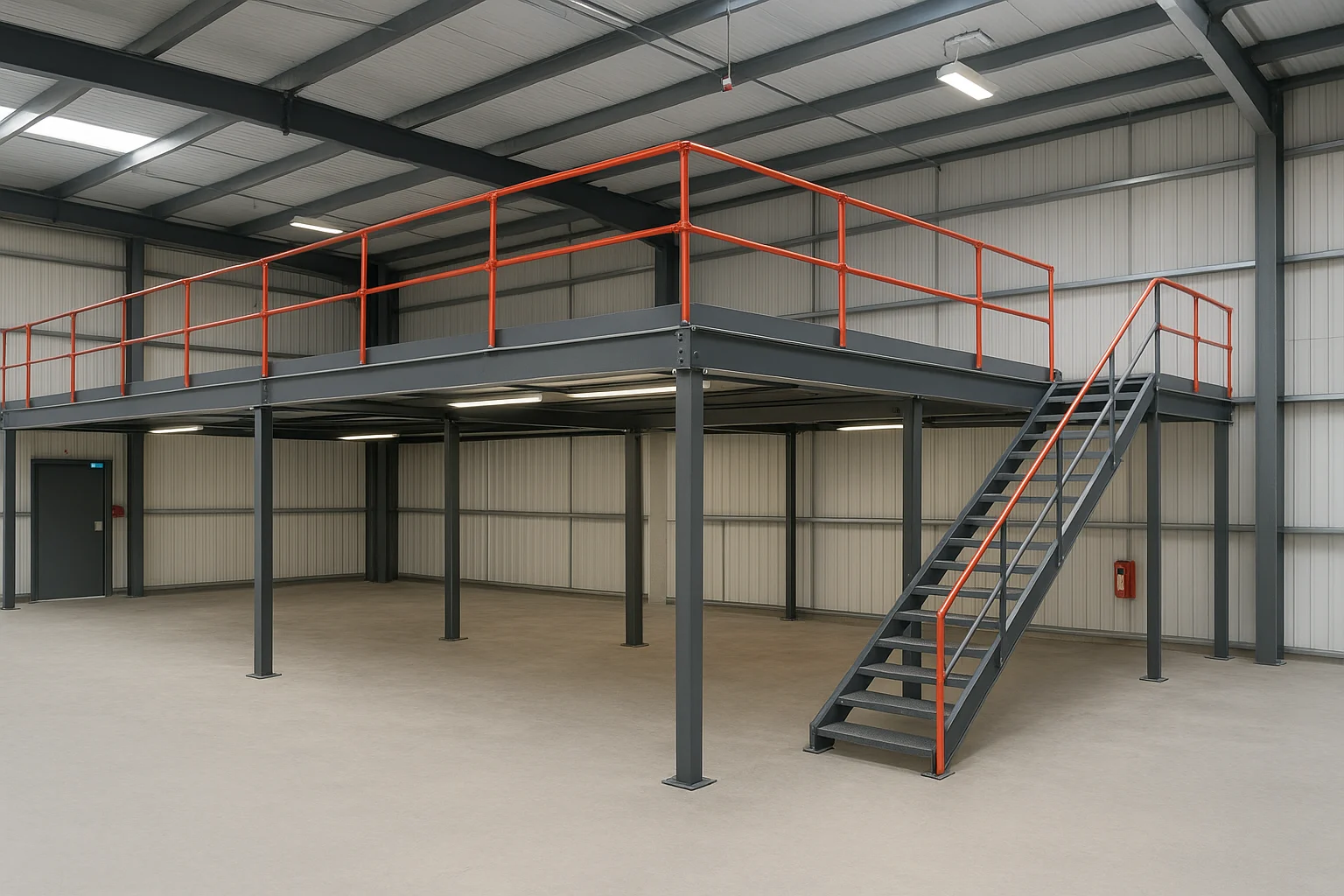
When you invest in a mezzanine floor, fire safety is not just a box to tick—it’s a critical consideration that can affect compliance, insurance, and most importantly, the safety of everyone in your facility. Whether you’re building a storage platform in a warehouse or adding extra office space within a commercial unit, fire regulations are strict, and rightly so.
Unfortunately, mezzanine installations sometimes fall short of the mark. Mistakes—like overlooking fire-rated materials or failing to provide adequate escape routes—can lead to serious risks and costly retrofits. The good news? With the right planning and professional guidance, your mezzanine floor can be fully compliant, safe, and future-proof.
In this article, we’ll break down the essentials of fire safety for mezzanine floors, highlight the most common pitfalls, and show you how to avoid them.
Why Fire Safety Matters in Mezzanine Design
A mezzanine floor alters the layout of your building. It introduces new escape routes, fire loads, and structural considerations that impact how a fire could behave in your space.
Key reasons fire safety is non-negotiable:
- Life safety: Ensuring staff, visitors, and contractors can evacuate safely in an emergency.
- Legal compliance: Meeting UK Building Regulations (such as Part B: Fire Safety) and local authority requirements.
- Insurance coverage: Insurers often demand evidence of fire compliance before issuing or renewing policies.
- Business continuity: A single fire can cause catastrophic downtime. Fire-safe design reduces risks and potential damage.
Think of it this way: your mezzanine is an investment. Protecting it (and the people who use it) makes sound business sense.
The Core Fire Safety Standards for Mezzanine Floors
When planning a mezzanine floor, here are the critical fire protection measures you’ll need to consider:
1. Fire Rating of the Structure
- Steelwork protection: Mezzanine support columns and beams must often be encased in fire-rated cladding or intumescent paint to achieve the required fire resistance (typically 30–60 minutes).
- Decking: Fire-rated decking helps prevent fire spread from floor to floor. Particleboard, for example, may need a protective finish to meet fire standards.
2. Fire Escape Routes
Escape routes are central to compliance. Requirements depend on the size, use, and occupancy of your mezzanine. Generally:
- Mezzanines used for storage may need at least two escape staircases if over a certain size.
- Travel distances to an exit must fall within legal limits. If your layout is too long or complex, additional stairs may be required.
- Staircase design must include fire-resistant enclosures or partitions in certain cases.
3. Fire Detection and Alarm Systems
Installing smoke detectors and alarms that cover both ground and mezzanine levels is essential. These systems should connect to your building’s main fire alarm, ensuring rapid response.
4. Fire Suppression
Sprinkler systems may be required depending on mezzanine size and use. For large-scale storage platforms, sprinklers above and beneath the floor are common.
5. Fire Separation
If your mezzanine is used for offices or production, fire-rated partitions may be required to separate high-risk areas from escape routes or other spaces.
Common Mistakes That Lead to Non-Compliance
Even well-intentioned projects can fall short if fire safety is treated as an afterthought. Based on our experience, here are the top pitfalls:
- Underestimating fire load: Using a mezzanine for high-density storage without proper fire protection.
- Insufficient escape planning: Assuming one staircase will suffice when regulations require more.
- Ignoring structural protection: Leaving steelwork exposed, making the mezzanine vulnerable in a fire.
- Poor integration with existing systems: Not linking mezzanine alarms to the main building fire alarm.
- Skipping professional approval: Installing a mezzanine without consulting Building Control or fire officers.
Each of these mistakes can cause delays, force expensive remedial work, or even render your mezzanine unusable until corrected.
If you’d like to dive deeper into common pitfalls, check out our guide to mezzanine mistakes.
How to Ensure Your Mezzanine Is Fire Compliant
Here’s a step-by-step approach to staying on the right side of fire safety:
- Work with a specialist supplier
Choose a mezzanine provider who understands fire safety regulations, not just the construction side. Experienced specialists will design with compliance in mind from day one.
- Early engagement with Building Control
Don’t wait until after the build. Engage your local Building Control officer during the design stage to agree on fire safety requirements.
- Carry out a fire risk assessment
Before installation, a risk assessment can identify potential hazards and inform design choices. This should be updated once the mezzanine is in place.
- Design for worst-case scenarios
Even if regulations don’t demand sprinklers or two staircases, think ahead. If you plan to expand operations, future requirements could change—designing for flexibility saves time and money later.
- Insist on certification and documentation
Every fire-rated material, from paint to panels, should come with certification. Keep these records on file for insurers and compliance checks.
For a detailed look at the approval process, see our post on mezzanine compliance.
Real-World Example
A Midlands-based distribution centre recently installed a 400m² mezzanine for storage. Initially, they planned a single staircase and no fire-rated cladding to save costs. However, after consultation with Building Control, it was clear this would not pass approval.
The solution involved:
- Adding a second escape staircase
- Encasing the steel columns in fire-rated cladding
- Installing a smoke detection system integrated with the building alarm
Yes, the changes added cost. But the mezzanine was signed off without issue, fully insured, and—most importantly—safe. This avoided future downtime and liability.
Fire safety is not optional—it’s fundamental. Cutting corners may seem like a cost-saving measure, but the risks far outweigh any short-term gain. By working with specialists, engaging regulators early, and prioritising compliance, you’ll ensure your mezzanine floor is safe, legal, and built to last.
At Factory Mezzanine Floors, we design and install mezzanines that meet every fire safety standard, giving you peace of mind that your project is in expert hands.
Ready to discuss your mezzanine project? Get in touch today for a free consultation.
- Ways to Reconfigure Your Mezzanine Floor as Your Business Grows | Factory Mezzanine Floors
- Before & After: Transforming Warehouse Layouts with Mezzanine Floors
- How a Mezzanine Floor Increased Productivity by 40%
- Common Mistakes to Avoid When Installing a Mezzanine Floor
- How a Mezzanine Floor Can Double Your Storage Without Adding a Single Square Metre
- Mezzanine Floors vs. Relocation: Which Saves More Money? | Factory Mezzanine Floors
- 5 Signs Your Business Needs a Mezzanine Floor | Factory Mezzanine Floors
- The Importance of Professional Engineering in Mezzanine Design | Factory Mezzanine Floors
- How to Ensure Your Mezzanine Floor Meets Fire Safety Standards
- How to Ensure Your Mezzanine Floor Meets Fire Safety Standards in Australia