
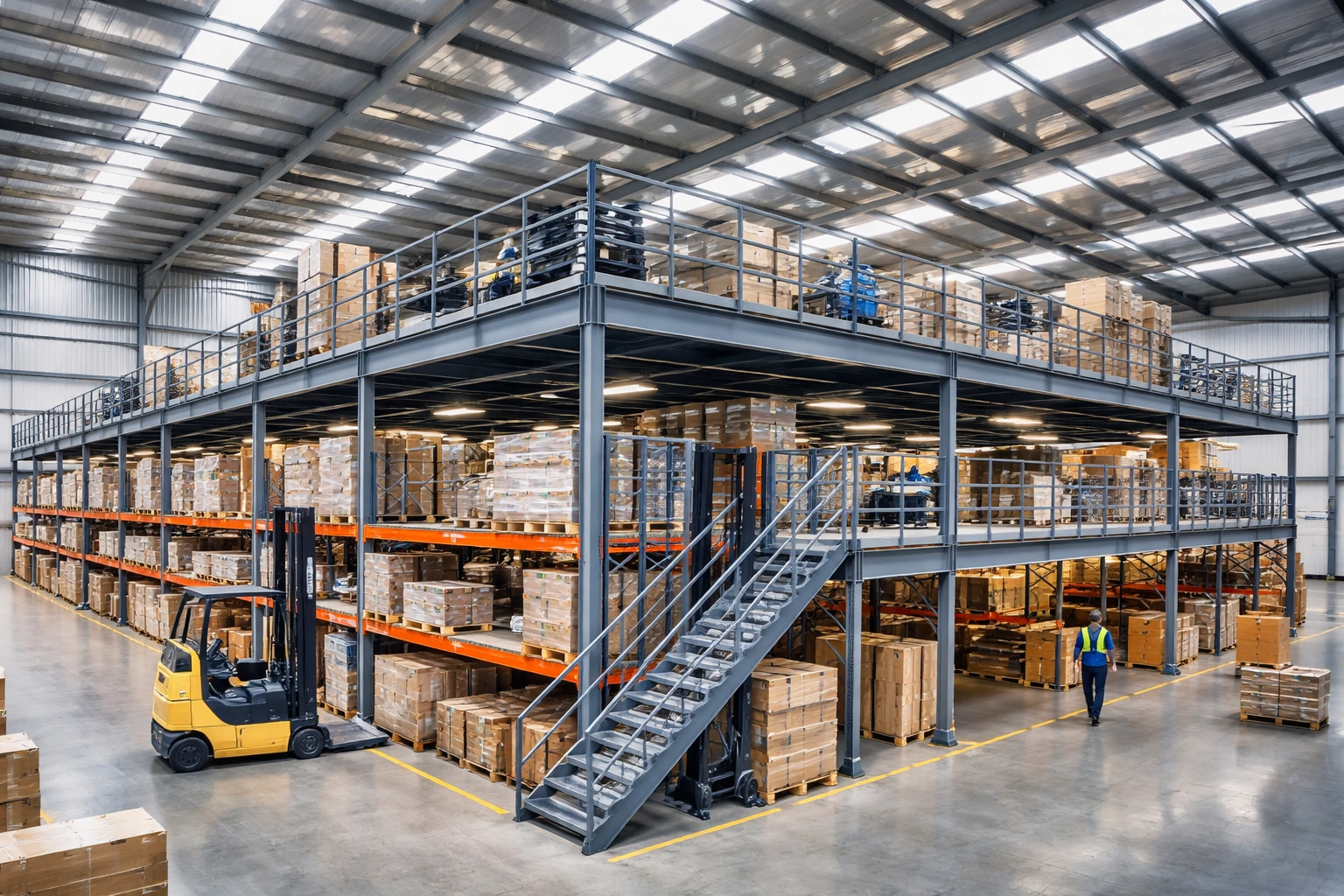
For many warehouse operators, the tipping point comes sooner than expected. Stock levels grow, operations expand, and suddenly the space that once felt generous starts to feel restrictive. The default reaction? Start looking for a bigger facility.
But relocating isn’t always the smartest move.
In my experience working with warehouse managers and business owners, the most cost-effective solution is often already sitting right in front of you — unused space within your existing premises. The key lies in how you unlock it.
This guide explores practical, proven strategies to maximise warehouse space without the disruption and cost of moving, with a strong focus on structural solutions like mezzanine floors and intelligent reconfiguration.
Rethink the Space You Already Have
Before committing to relocation, it’s worth taking a step back and reassessing your current layout. Many warehouses operate at only a fraction of their true capacity, particularly when vertical space is underutilised.
Most facilities are designed with high ceilings to accommodate racking or machinery — yet that overhead space often sits empty.
Ask yourself:
- Are you using your full vertical clearance?
- Is your current layout optimised for workflow?
- Are there areas dedicated to low-value storage that could be reorganised?
A detailed space audit can reveal surprising opportunities. And more often than not, it leads to one standout solution.
Unlock Vertical Space with Mezzanine Floors
If there’s one upgrade that consistently delivers immediate impact, it’s the installation of a mezzanine floor.
A mezzanine effectively creates a second level within your existing warehouse footprint. Instead of expanding outward, you expand upward — doubling or even tripling your usable floor area without increasing your lease or footprint.
Why Mezzanine Floors Work So Well
- Maximise unused airspace
- High ceilings become valuable real estate rather than wasted volume.
- Cost-effective expansion
- Compared to relocating or building extensions, mezzanines offer a significantly lower investment with faster ROI.
- Customisable design
- Whether you need additional storage, office space, or production areas, mezzanines can be tailored to suit.
- Minimal disruption
- Installation can often occur alongside ongoing operations, avoiding costly downtime.
For businesses dealing with increasing inventory, seasonal fluctuations, or operational growth, mezzanine floors provide a scalable solution that evolves with your needs.
Improve Storage Density with Smarter Systems
Maximising space isn’t just about adding levels — it’s also about improving how efficiently you store goods.
Traditional storage setups often leave gaps, inconsistencies, or underutilised zones. By upgrading your storage systems, you can significantly increase capacity without adding square metres.
Practical Storage Enhancements
- High-density pallet racking
- Reduce aisle space while maintaining accessibility.
- Long-span shelving
- Ideal for smaller items and picking operations, especially on mezzanine levels.
- Vertical storage systems
- Automated or manual solutions that maximise height usage.
- Mobile racking systems
- Eliminate unnecessary aisles by allowing shelves to move as needed.
These improvements work best when integrated with a mezzanine structure, creating a cohesive, multi-level storage environment.
Reconfigure Your Layout for Flow and Efficiency
Space constraints are often made worse by inefficient layouts. A poorly organised warehouse doesn’t just waste space — it slows down operations.
Reconfiguration focuses on aligning your layout with how your business actually functions day-to-day.
Key Considerations
- Product movement frequency
- Fast-moving items should be easily accessible.
- Clear zoning
- Separate receiving, storage, picking, and dispatch areas.
- Minimise travel distances
- Reduce time spent moving between zones.
- Eliminate bottlenecks
- Ensure pathways are wide and unobstructed.
A well-planned layout can free up significant usable space simply by reducing inefficiencies.
Combine Office and Operational Space Strategically
In many warehouses, office areas consume valuable ground-level space that could be better used for storage or production.
A common solution is relocating office functions onto a mezzanine level. This approach achieves two outcomes at once:
- Frees up ground floor space for core operations
- Keeps administrative areas integrated within the warehouse environment
It’s a practical way to consolidate your footprint while improving overall space utilisation.
Plan for Scalability, Not Just Immediate Needs
One of the biggest mistakes businesses make is solving today’s problem without considering tomorrow’s growth.
Any space optimisation strategy should be designed with scalability in mind.
For example:
- A mezzanine floor can be engineered for future expansion
- Storage systems can be adjusted as inventory changes
- Layouts can be adapted as workflows evolve
This forward-thinking approach ensures your investment continues to deliver value over time, rather than becoming another limitation down the track.
Safety and Compliance Should Always Come First
Maximising space should never come at the expense of safety.
Every structural addition or layout change must comply with Australian standards and workplace safety regulations. This includes:
- Load capacity requirements
- Safe access points (stairs, handrails, gates)
- Fire safety and egress compliance
- Adequate lighting and ventilation
Working with experienced professionals ensures your upgrades not only improve efficiency but also meet all regulatory requirements.
The Real Cost of Not Optimising Your Space
It’s easy to underestimate the hidden costs of an inefficient warehouse.
- Lost productivity due to poor layout
- Increased labour time for picking and handling
- Higher risk of damage or errors
- Pressure to relocate prematurely
When you weigh these ongoing costs against the investment in solutions like mezzanine floors, the decision becomes much clearer.
Optimising your existing space isn’t just about saving money — it’s about creating a more efficient, scalable, and profitable operation.
Why Mezzanine Floors Are the Smart Alternative to Moving
Relocating a warehouse is expensive, disruptive, and time-consuming. Between lease negotiations, fit-outs, downtime, and logistics, the costs can escalate quickly.
In contrast, mezzanine floors offer:
- Faster implementation
- Lower upfront investment
- Immediate increase in usable space
- Long-term flexibility
For many Australian businesses, it’s the difference between reacting to growth and staying ahead of it.
Take the Next Step
If your warehouse is feeling constrained, the solution may not be a new premises — it may simply be a smarter use of the one you already have.
At Factory Mezzanine Floors, we specialise in designing and installing tailored mezzanine solutions that help businesses unlock their full potential without relocating.
Whether you need additional storage, improved workflow, or a complete reconfiguration, our team can help you transform your space into a more efficient, scalable operation.
Ready to maximise your warehouse space? Get in touch today and discover what’s possible.
- How to Maintain Your Mezzanine Floor for Maximum Longevity
- Ways to Reconfigure Your Mezzanine Floor as Your Business Grows
- Before & After: Transforming Warehouse Layouts with Mezzanine Floors
- How a Mezzanine Floor Increased Productivity by 40%
- Common Mistakes to Avoid When Installing a Mezzanine Floor
- Mezzanine Floors vs. Relocation: Which Saves More Money?
- 5 Signs Your Business Needs a Mezzanine Floor
- The Importance of Professional Engineering in Mezzanine Design
- How to Ensure Your Mezzanine Floor Meets Fire Safety Standards in Australia
- How to Ensure Your Mezzanine Floor Meets Fire Safety Standards