Council Approval Guidance for Mezzanines in QLD & NSW
Compliance Done Right. Investment Protected.
Compliance Done Right. Investment Protected.
From design and engineering to fabrication, installation, and council approval, we handle everything—seamless delivery, compliance, and cost-effective mezzanine solutions. Here’s what our clients have to say:

The factory had limited ground-floor storage, with equipment, vehicles and trailers competing for space. The unit was approximately 6.6 metres high, leaving valuable vertical space...
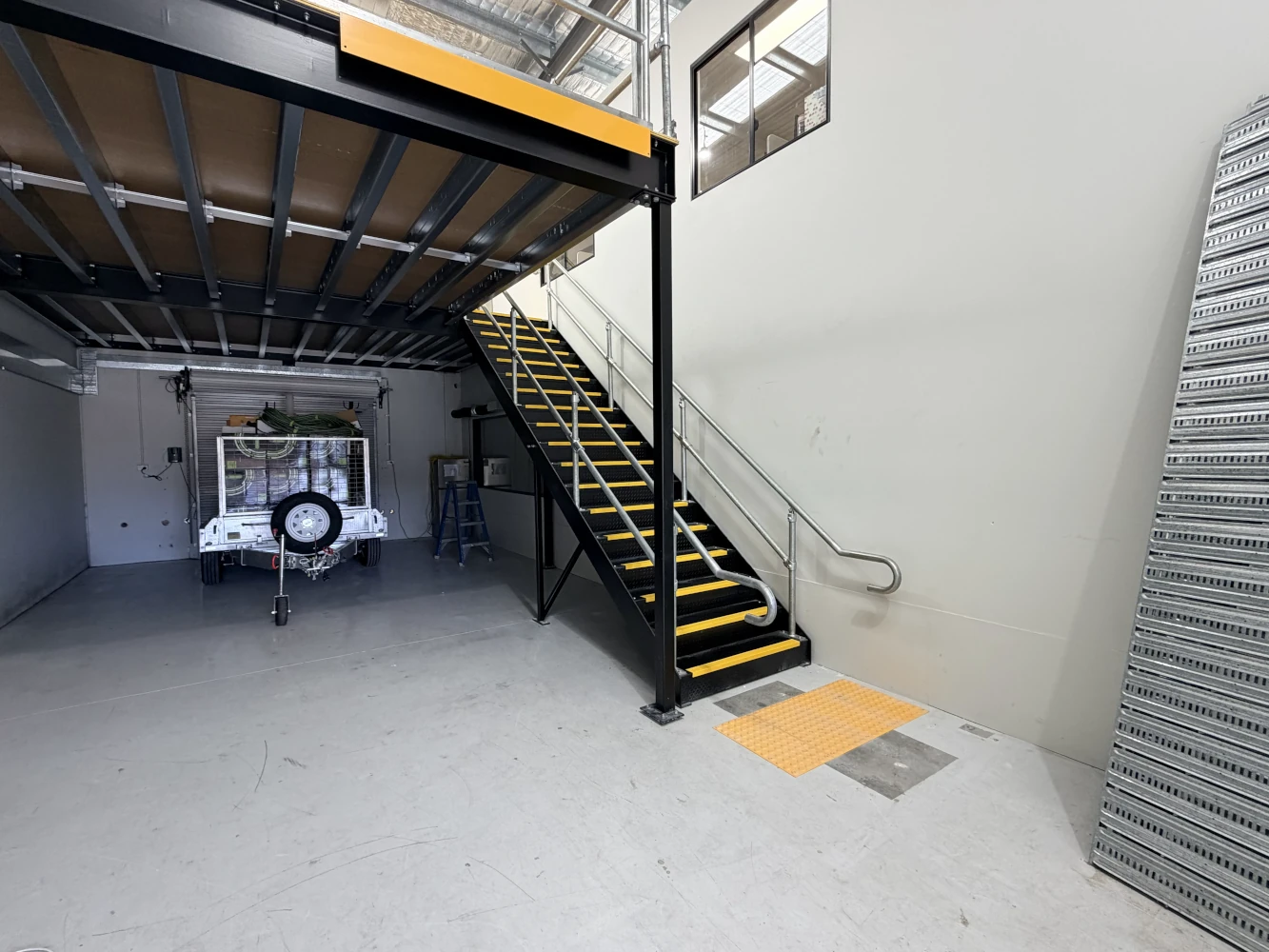
FMF installed an approximately 8m × 5.3m mezzanine with stairs and a pallet gate. The new floor allowed equipment and materials to be stored overhead,...
Because design and documentation are finalised early, your project can move straight into fabrication and installation once approval is granted.
Is there a cost for council approval?
Council approval involves submission fees, certifier costs, and documentation. FMF provides advice and support as part of our service.
Who deals with the certifier — me or FMF?
FMF works alongside you and your chosen certifier, offering advice and documentation support to simplify the approvals process. Your involvement is always recommended.
Do mezzanines need council or building approval?
In almost every case, yes. A new mezzanine is building work that needs approval before it's built and sign-off before it's used. Depending on your state, though, that approval usually comes from a building certifier or building surveyor rather than straight from council.
Queensland:
Building work needs a building development approval unless it's "accepted development" under the Building Regulation 2021. Some sites also need approval under the council planning scheme (Business Queensland). Approvals are issued by a QBCC-licensed building certifier, either private or employed by a council (Business Queensland). A certificate of occupancy is needed before the building is used after the work (Business Queensland). In Brisbane, for example, the private certifier lodges the approval documents with Council (Brisbane City Council).
New South Wales:
A mezzanine counts toward a building's gross floor area (see the gross floor area definition in the City of Sydney LEP 2012 Dictionary, which follows the standard NSW definition). Internal alterations that add floor area can't be approved as exempt development or under the internal-alterations complying development code (SEPP (Exempt and Complying Development Codes) 2008, cl 5.2). Instead, a mezzanine is approved either as complying development under the industrial and business buildings additions standards, where the land and zone are eligible, or through a development application to council (NSW Planning, Complying Development for Business and Industry pocket guide). An occupation certificate is required before the new floor is used (NSW Planning, Occupation certificates FAQ).
Victoria:
All building work needs a building permit unless it's exempt under Schedule 3 of the Building Regulations 2018. You appoint a registered building surveyor to issue it, and any planning permit you need must be in place first (VBA, Planning and building permits). When the work is finished, the surveyor issues an occupancy permit or certificate of final inspection (VBA, Appointing a building surveyor). Hume City Council, for example, notes that a business premises fit-out needs a permit unless Schedule 3 exempts it (Hume City Council). Victoria's building regulator is now the Building and Plumbing Commission (BPC).
Size matters everywhere:
Under the National Construction Code, a mezzanine larger than 200 m² or one-third of the room's floor area (whichever is less) counts as a storey for fire-safety purposes (NCC 2022, C2D3).
Every site is different, and your certifier or building surveyor makes the final call. We prepare the engineered drawings and manage the approval process for you. See Council Approval Guidance or call 1300 998 883.
Will council approval delay my project?
With the right preparation, approvals can move quickly. FMF provides the documentation needed upfront to help minimise delays.
Can you work with my property manager or landlord?
Yes. We regularly coordinate with property managers, landlords, and owners to ensure all parties are aligned during the approval process.