
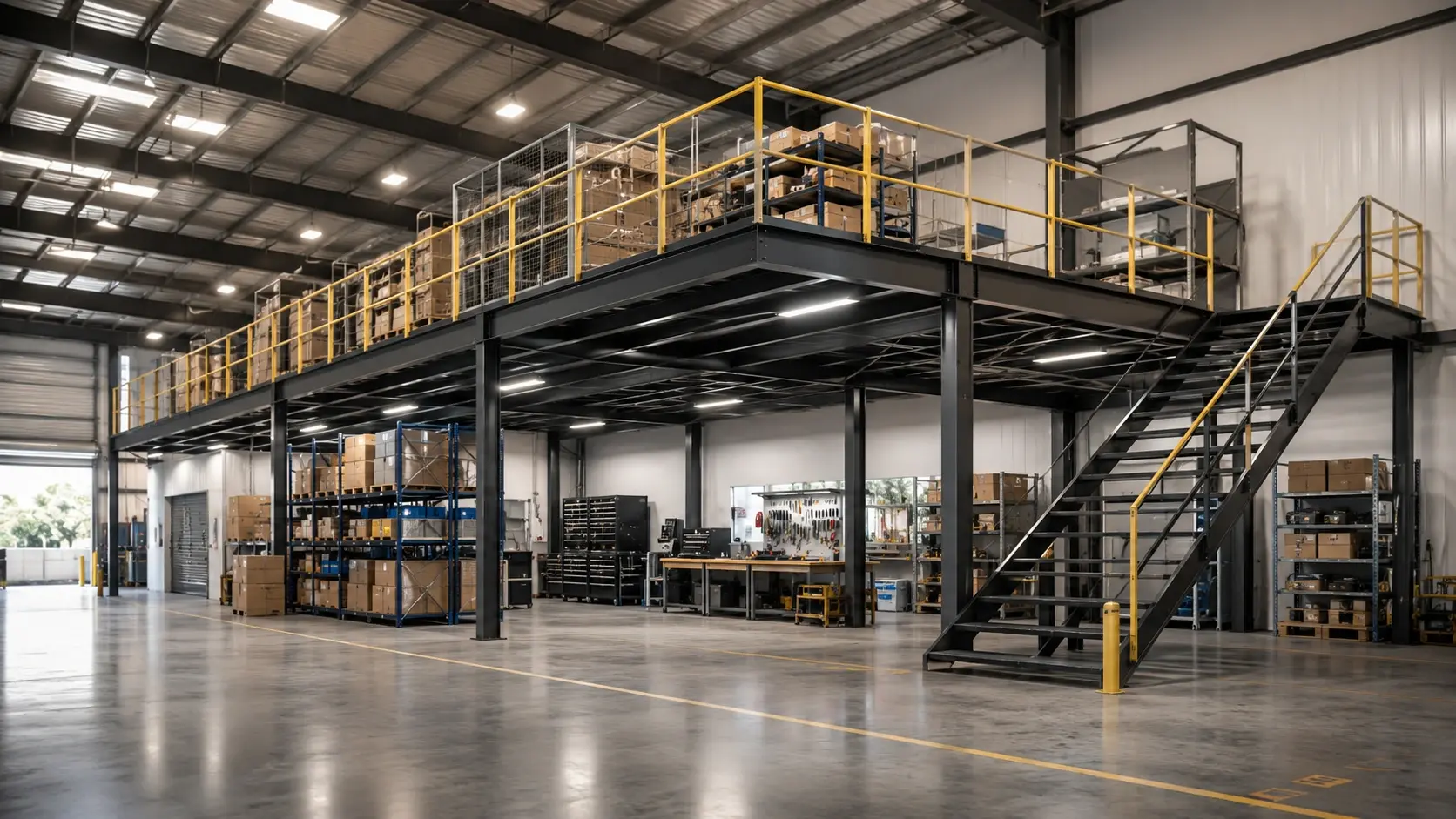
If you run a business from a unit in Kunda Park, Kawana, Caloundra West, Coolum or Nambour, you already know how quickly a shed fills up. Stock grows, equipment arrives and the building that once felt generous starts to feel tight. This guide looks at the signs you have outgrown your premises and the warehouse space solutions Sunshine Coast operators can weigh up before signing a bigger lease.
The options are not complicated. The skill is in matching the right one to your building, your budget and how fast you are growing.
The Sunshine Coast context
The Sunshine Coast is a spread-out region with several distinct business areas rather than one central hub. Kunda Park and the Maroochydore area, Kawana and Warana, Caloundra, Coolum and Nambour–Woombye each have their own mix of trades, manufacturers, distributors and service businesses.
That spread matters for space. Moving to a larger unit often means moving to a different part of the Coast, which can change your commute, your customers' access to you and your staff's travel. For many owners, staying put is worth a serious look.
Local availability and rents move with the market, so check current conditions with a local agent.
Five signs you have outgrown your Sunshine Coast premises
1. Stock is spilling out of racking and into walkways
Pallets in aisles, product stacked against walls and goods sitting wherever there is a gap are the first signs of trouble. They slow picking, make stock counts harder and increase the chance of an incident with a forklift or pallet jack.
If the overflow is a daily occurrence rather than a seasonal peak, you have a capacity problem, not a tidiness problem.
2. Goods are being stored outside or off site
Storing stock outside, in containers or in a second rented space adds handling, travel time and risk. It also makes it harder to keep track of what you hold.
Coastal weather is hard on stored goods, so anything that needs to stay dry and clean belongs inside. If you are paying for a second site only to hold overflow, price that against creating more space in the building you already have.
3. You are turning away work or delaying equipment
A new machine, a bigger order or a new product line should be good news. If you are hesitating because there is nowhere to put it, the building is limiting your growth.
4. Your office and staff areas are squeezed
Admin, supervisors, meeting space and lunchrooms often get squeezed as a team grows. Giving up warehouse floor to fit them in only moves the problem somewhere else.
5. Your unit is tall but your operation is flat
Many industrial buildings have height that is not being used. If the roof is well above your racking and equipment, you may be able to build upward instead of outward.
Your warehouse space solutions on the Sunshine Coast
Here are the main routes, with an honest look at each.
Option 1: Reorganise what you have
A tidy-up, a re-slot of your stock and better racking can often free up some room. It is the cheapest first step and worth doing regardless of what you decide next.
It has limits. If you have already tightened the layout and the building is still full, reorganising will only buy you time.
Option 2: Lease a second unit or move
A larger premises can solve a space problem, but it comes with real costs. These include moving equipment, possible production downtime, a new fit-out, new approvals and a higher rent.
If your business needs a different location, moving may be the right answer. If it only needs more room, it may be more than you need.
Option 3: Add a mezzanine floor
A mezzanine creates a second level inside your existing building. You gain floor area without increasing the footprint, and you stay where your customers and staff already know to find you.
The new level can hold storage, packing, light assembly, offices or staff facilities. Our overview at https://factorymezzaninefloors.com.au/mezzanines/mezzanine-floors explains the options, and https://factorymezzaninefloors.com.au/mezzanines/mezzanines-for-small-business-expansion covers how it suits smaller operators.
Option 4: Combine approaches
Often the best answer is a mix. You might add a mezzanine for storage, then use the freed ground floor for better workflow. Or you might build in stages, with a smaller mezzanine now and room to extend it later.
What a Sunshine Coast mezzanine project involves
FMF delivers mezzanines across the Sunshine Coast Region, with location pages covering the main business areas:
- https://factorymezzaninefloors.com.au/location/qld/sunshine-coast/kunda-park for Kunda Park
- https://factorymezzaninefloors.com.au/location/qld/sunshine-coast/kawana-warana for Kawana and Warana
- https://factorymezzaninefloors.com.au/location/qld/sunshine-coast/caloundra for Caloundra
- https://factorymezzaninefloors.com.au/location/qld/sunshine-coast/coolum for Coolum
- https://factorymezzaninefloors.com.au/location/qld/sunshine-coast/nambour-woombye for Nambour and Woombye
Our team's process typically runs like this:
- Site consult. We confirm dimensions and review obstacles and site conditions.
- Design. We design a mezzanine for your intended use, load and access, including stairs, handrails and any pallet gates or goods lift.
- Approvals. We guide you through the approvals pathway.
- Fabrication and installation. We manage the build around your operation, aiming for no downtime.
Our fixed quote pricing means you know the figure before you commit. For a closer look at our approach, see https://factorymezzaninefloors.com.au/mezzanines/full-project-management.
What approvals to expect in Queensland
Mezzanines are building work, so you should plan for approvals. Your building certifier will confirm what applies to your site. These points are general guidance only:
- Building work in Queensland needs a building development approval unless it is accepted development under the Building Regulation 2021, and some work may also need approval under the local council planning scheme. Source: https://www.business.qld.gov.au/industries/building-property-development/building-construction/approvals-inspections/when-not-needed
- Building approvals are issued by a building certifier, who is licensed by the QBCC and assesses, inspects and certifies the work. Source: https://www.qbcc.qld.gov.au/news/role-responsibilities-certifier
- A certificate of occupancy is required before a commercial or industrial building (classes 5 to 9) is used or occupied after building work. The certifier issues it. Source: https://www.business.qld.gov.au/industries/building-property-development/building-construction/approvals-inspections/certificate-occupancy
- Under the National Construction Code 2022, a mezzanine is regarded as a storey when calculating rise in storeys if its floor area is more than 200 m² or more than one-third of the floor area of the room, whichever is the lesser. Source: https://ncc.abcb.gov.au/editions/ncc-2022/adopted/volume-one/c-fire-resistance/part-c2-fire-resistance-and-stability
Your tenancy matters too. If you lease, you will need your landlord's agreement before building work starts.
A real example of staying put
Grevillea Distribution is a Brisbane wholesale supplier that had outgrown its factory but couldn't relocate. It faced limited ground-level space, structural restrictions and flood-zone compliance requirements, and it needed to expand without disrupting operations. That is a different suburb, but the situation will be familiar to many Coast owners. Read the full story at https://factorymezzaninefloors.com.au/projects/grevillea-distribution.
How to decide
Ask these questions in order:
- Have I already optimised my layout?
- Do I have usable height I'm not using?
- Does my business need to be in this location?
- What would a move really cost, including downtime?
- How much growth do I expect over the next few years?
If you have height, a good location and a growing business, a mezzanine deserves a quote.
Talk to our team
If your Sunshine Coast site is full, call us on 1300 998 883 or request a free quote. We will book an obligation-free site consult and give you a clear view of your options.
FAQs
Do you work across the Sunshine Coast?
Yes. We have location pages for Kunda Park, Kawana and Warana, Caloundra, Coolum, Maroochydore and Nambour–Woombye. Our QLD office is at Upper Mount Gravatt, and we travel to your site for the consult.
Can I build a mezzanine in a leased warehouse?
Often you can, but you will need your landlord's consent and the right approvals. Your certifier will confirm what applies.
How do I know my building is suitable?
It depends on clear height, floor condition, column layout and what you plan to use the space for. A site visit is the quickest way to find out. Our consulting service at https://factorymezzaninefloors.com.au/mezzanines/consulting is a good place to start.
- Mezzanine Floor Maintenance: Maximise Longevity & Safety
- How to Maintain Your Mezzanine Floor for Maximum Longevity
- How to Reconfigure a Mezzanine Floor as Your Business Grows
- Warehouse Layout Ideas with Mezzanine Floors: How to Plan the Zones, Flow and Access
- Mezzanine Floor Productivity: How a Distribution Centre Gained 40%
- Buying a Mezzanine Floor: Quoting Mistakes That Cost Businesses Money
- Mezzanine Fire Safety NSW: Approvals, Certifiers and Ongoing Obligations
- Mezzanine Fire Safety Requirements: How the NCC Treats Mezzanines
- Mezzanine Installation Mistakes: What Goes Wrong on Site and How to Avoid It
- Retail Stockroom Mezzanine on the Gold Coast: Free Up Your Shop Floor