
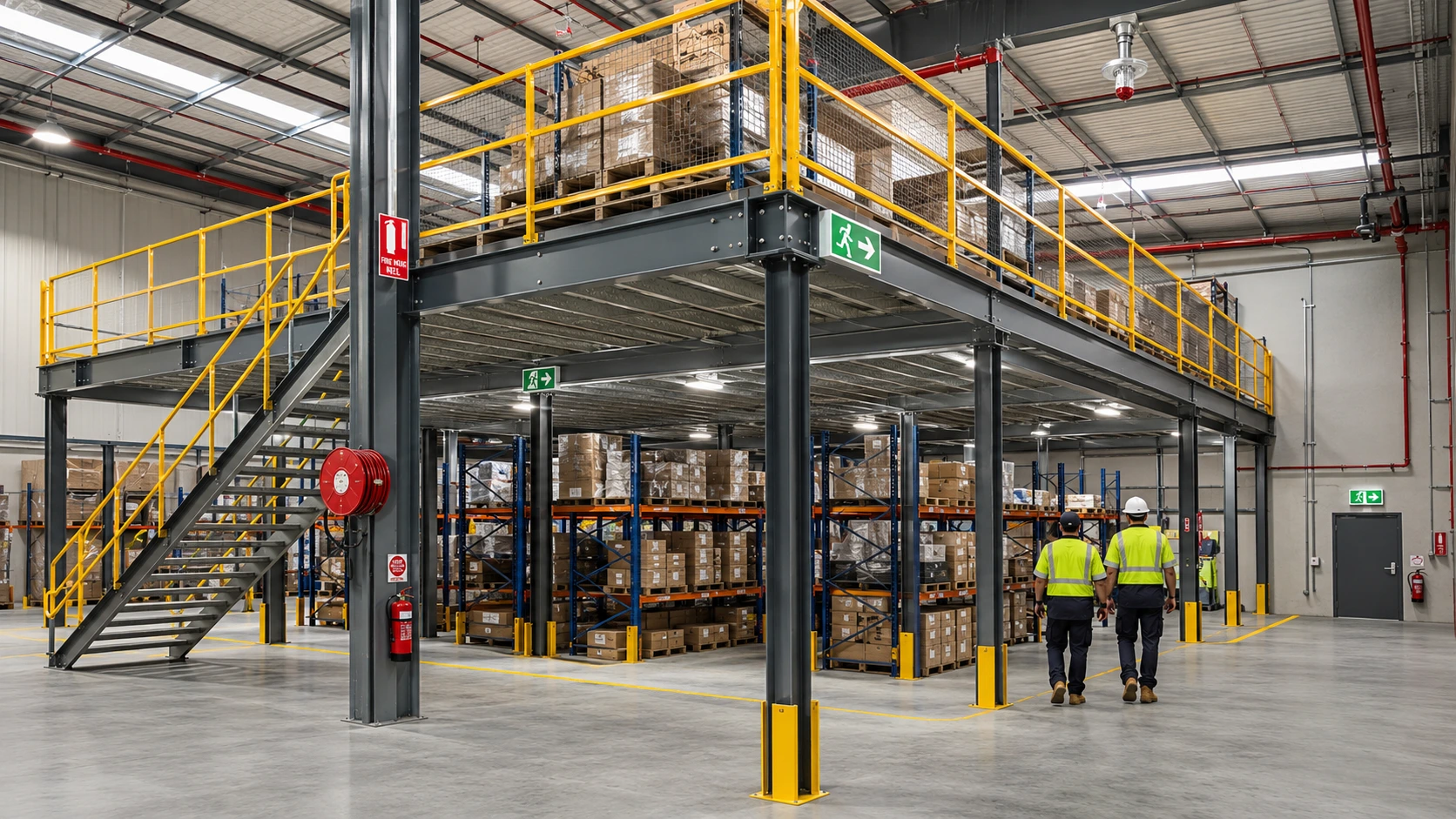
Installing a mezzanine floor is one of the smartest ways Australian businesses can maximise warehouse space without the expense of relocating. Whether you operate a distribution centre, manufacturing facility, workshop, or commercial storage site, a mezzanine floor can dramatically improve operational efficiency and increase usable floor area.
However, one critical factor is often underestimated during planning — fire safety compliance.
A mezzanine floor is not simply a raised platform. Once installed, it becomes part of the building structure and must comply with strict Australian fire safety regulations and building standards. Failing to meet these requirements can lead to costly rectification work, project delays, insurance complications, and serious safety risks for workers and visitors.
Understanding what is required from the beginning helps ensure your mezzanine project is safe, compliant, and built to last.
Why Fire Safety Compliance Matters
Fire safety regulations exist to protect people, property, and business continuity. In industrial and warehouse environments, risks can increase significantly due to:
- High stock volumes
- Flammable materials
- Machinery and electrical equipment
- Restricted access areas
- Increased occupant loads
Adding a mezzanine floor changes the internal layout and can impact fire escape routes, smoke movement, sprinkler effectiveness, and structural fire resistance.
This is why Australian authorities assess mezzanine installations carefully before approval is granted.
Businesses that prioritise compliance early in the design process generally avoid expensive redesigns and approval delays later on.
Understanding Australian Mezzanine Fire Safety Requirements
In Australia, mezzanine floors typically need to comply with:
- The National Construction Code (NCC)
- Australian Standards
- Local council regulations
- Fire engineering requirements
- Building approval conditions
The exact requirements depend on several factors, including:
- The size of the mezzanine
- Intended use
- Occupancy classification
- Warehouse layout
- Existing fire protection systems
- Height and accessibility
For example, a small storage mezzanine may have different requirements compared to a large office mezzanine within a warehouse facility.
Working with experienced mezzanine specialists is essential because compliance obligations can vary significantly between projects.
Fire Safety Features Commonly Required
Fire-Rated Structural Elements
In some cases, mezzanine columns and structural steel may require fire-rated protection to maintain structural integrity during a fire event.
This can involve:
- Intumescent coatings
- Fire-rated cladding
- Encasement systems
- Passive fire protection materials
The required fire resistance level (FRL) depends on the building classification and occupancy requirements.
Adequate Fire Exits
Safe evacuation pathways are one of the most important compliance considerations.
A compliant mezzanine floor may require:
- Multiple exit points
- Fire-isolated stairways
- Minimum stair widths
- Emergency lighting
- Clearly marked exit signage
Poor exit planning is one of the most common reasons mezzanine designs fail approval assessments.
Sprinkler System Integration
Installing a mezzanine can interfere with existing sprinkler coverage if not planned correctly.
Fire authorities may require:
- Additional sprinkler heads above and below the mezzanine
- Reconfigured sprinkler layouts
- Increased water supply capacity
- Updated hydraulic calculations
Ignoring sprinkler adjustments can leave sections of the warehouse inadequately protected.
Smoke Detection and Ventilation
Depending on the building design, smoke hazard management systems may also need upgrading.
This could include:
- Smoke curtains
- Detection systems
- Mechanical ventilation
- Smoke exhaust systems
These measures help maintain visibility and safe evacuation conditions during emergencies.
The Importance of Early Compliance Planning
One of the biggest mistakes businesses make is treating fire compliance as an afterthought.
In reality, fire safety should be considered during the earliest stages of mezzanine planning and design.
When compliance is integrated from the start, businesses can:
- Reduce approval delays
- Avoid redesign costs
- Improve construction efficiency
- Prevent operational disruptions
- Maintain insurance compliance
Experienced mezzanine providers will typically coordinate with:
- Structural engineers
- Building certifiers
- Fire engineers
- Local councils
- Hydraulic consultants
This collaborative approach helps streamline approvals and minimise costly surprises later in the project.
Common Fire Safety Mistakes to Avoid
Even well-intentioned projects can encounter compliance issues when critical details are overlooked.
Some of the most common mezzanine fire safety mistakes include:
Installing Without Proper Approvals
Some businesses assume smaller mezzanines do not require formal approval. Unfortunately, this can create major legal and insurance complications.
Most mezzanine floors require assessment and certification under Australian building regulations.
Blocking Existing Fire Systems
New structures can unintentionally obstruct:
- Sprinkler spray patterns
- Smoke detectors
- Emergency lighting
- Exit pathways
Every modification within the warehouse must work cohesively with existing fire systems.
Underestimating Occupancy Loads
A mezzanine used for offices, staff amenities, or workstations may trigger stricter fire safety requirements compared to storage-only applications.
Occupancy calculations affect:
- Exit requirements
- Stair dimensions
- Fire protection systems
- Ventilation requirements
Choosing Non-Compliant Designs
Budget-focused installations sometimes overlook long-term compliance obligations.
A cheaper upfront solution can quickly become more expensive if rectification works are required after inspection.
Businesses should prioritise compliant engineering and certified construction over short-term savings.
For more guidance, read our article on common mezzanine floor mistakes businesses should avoid.
How Professional Mezzanine Companies Help Ensure Compliance
Working with experienced mezzanine specialists makes a significant difference in both project efficiency and long-term safety outcomes.
Professional providers understand how to design systems that align with:
- Australian Standards
- Warehouse operational requirements
- Fire engineering recommendations
- Council approval processes
A reputable company will generally assist with:
- Site assessments
- Compliance planning
- Structural engineering
- Certification documentation
- Fire safety coordination
- Permit management
This reduces the burden on business owners and helps avoid compliance oversights that can delay projects.
Fire Safety and Insurance Considerations
Insurance providers increasingly assess whether warehouse modifications comply with building and fire safety regulations.
Non-compliant mezzanine structures may:
- Void insurance coverage
- Increase premiums
- Create liability risks
- Affect claim approvals after incidents
Documented compliance and certified installations provide stronger protection for both business assets and personnel.
It also demonstrates a commitment to workplace safety and responsible facility management.
Future-Proofing Your Warehouse
A compliant mezzanine floor does more than satisfy regulations — it creates a safer, more adaptable facility for long-term growth.
As businesses evolve, warehouse layouts often change. A professionally designed mezzanine allows for future scalability while maintaining compliance standards.
Forward-thinking mezzanine design can accommodate:
- Expanding inventory
- Additional workspaces
- New machinery
- Operational workflow improvements
- Updated fire safety systems
Planning correctly from the outset helps avoid costly retrofits later.
Final Thoughts
Fire safety compliance should never be treated as a secondary consideration when installing a mezzanine floor.
A well-designed mezzanine not only improves warehouse efficiency and maximises available space — it also protects staff, inventory, and business operations.
From fire-rated structural systems to sprinkler integration and compliant exit design, every detail matters.
Working with experienced mezzanine professionals ensures your project meets Australian standards while delivering a safe, durable, and high-performing solution for your facility.
If you are planning a mezzanine installation, partnering with a knowledgeable provider early in the process can save considerable time, money, and stress.
For more information about compliant mezzanine solutions, visit Factory Mezzanine Floors.
- How to Maintain Your Mezzanine Floor for Maximum Longevity
- Ways to Reconfigure Your Mezzanine Floor as Your Business Grows
- Before & After: Transforming Warehouse Layouts with Mezzanine Floors
- How a Mezzanine Floor Increased Productivity by 40%
- Common Mistakes to Avoid When Installing a Mezzanine Floor
- Mezzanine Floors vs. Relocation: Which Saves More Money?
- 5 Signs Your Business Needs a Mezzanine Floor
- The Importance of Professional Engineering in Mezzanine Design
- How to Ensure Your Mezzanine Floor Meets Fire Safety Standards in Australia
- How to Ensure Your Mezzanine Floor Meets Fire Safety Standards