
For many warehouses, factories, and distribution centres across Australia, space eventually becomes the biggest operational constraint. Expanding the building footprint is expensive and often impractical, especially in industrial zones where land availability is limited.
That’s where mezzanine floors provide a smarter solution.
A professionally engineered mezzanine creates an additional level within your existing facility, effectively unlocking unused vertical space. Whether it’s for storage, offices, production areas, or pick-and-pack operations, the right mezzanine system can significantly improve workflow while avoiding the cost of relocation.
But installing one isn’t simply a matter of adding steel columns and decking. A safe, compliant mezzanine requires proper planning, engineering, and staged installation.
Below is a clear overview of the step-by-step process involved in installing a mezzanine floor.
1. Site Inspection and Feasibility Assessment
Every successful mezzanine project begins with a thorough site inspection.
An experienced mezzanine specialist will assess your facility to determine whether a mezzanine is viable and how it should be designed. This stage focuses on understanding both the physical environment and your operational needs.
During the inspection, several key factors are evaluated:
- Ceiling height and available vertical clearance
- Existing building structure and column placement
- Current workflow and traffic patterns
- Access points for forklifts or goods lifts
- Fire safety and emergency access requirements
In my experience working with warehouse planners, this early consultation often reveals opportunities businesses hadn’t considered—such as adding two smaller mezzanines instead of one large structure, or combining storage with office space.
The goal at this stage is simple: ensure the mezzanine will genuinely improve efficiency rather than create new bottlenecks.
2. Load Capacity Planning and Structural Engineering
Once feasibility is confirmed, the next step is engineering design.
Every mezzanine floor must be designed to support a specific load capacity, which depends on how the space will be used. Storage areas require different structural specifications compared to office spaces or manufacturing zones.
Typical load considerations include:
- Pallet storage weight
- Equipment and machinery loads
- Staff and pedestrian traffic
- Racking systems or shelving
- Dynamic loads from movement and operations
A structural engineer will calculate beam sizes, column spacing, and decking requirements to ensure the mezzanine meets Australian building standards.
Understanding load limits is critical. If you want a deeper breakdown of how weight is calculated, see our guide on mezzanine floor load capacity.
3. Design Layout and System Configuration
After engineering calculations are completed, the project moves into the design phase.
This stage transforms structural requirements into a practical layout that works with your daily operations.
Design elements typically include:
- Staircase locations
- Safety handrails and balustrades
- Pallet gates for loading
- Walkways and access routes
- Integration with existing racking
A well-designed mezzanine should feel like a natural extension of your facility. Staff movement should remain intuitive, and material handling should stay efficient.
Poor planning here can create serious operational headaches later, which is why experienced mezzanine specialists carefully consider how people, equipment, and inventory will move throughout the space.
4. Council Approvals and Compliance
Before installation begins, the mezzanine design must comply with Australian building codes and local council regulations.
This process may include:
- Engineering certification
- Building permits
- Fire safety compliance
- Accessibility requirements
Professional mezzanine suppliers usually manage this process on your behalf, ensuring documentation and approvals are handled correctly.
Skipping or rushing this stage can lead to compliance issues, delays, or costly modifications later. It’s one of the reasons businesses prefer working with experienced providers rather than attempting DIY mezzanine builds.
5. Manufacturing and Material Preparation
Once the design is approved, fabrication begins.
Steel columns, beams, and structural components are manufactured to match the engineered specifications. Precision manufacturing ensures every component fits perfectly during installation.
Typical materials used include:
- Structural steel columns
- Heavy-duty steel beams
- Steel decking or particle board flooring
- Handrails and safety barriers
- Staircases and pallet gates
Because mezzanine systems are modular, much of the structure is fabricated off-site. This significantly reduces installation time once materials arrive at the facility.
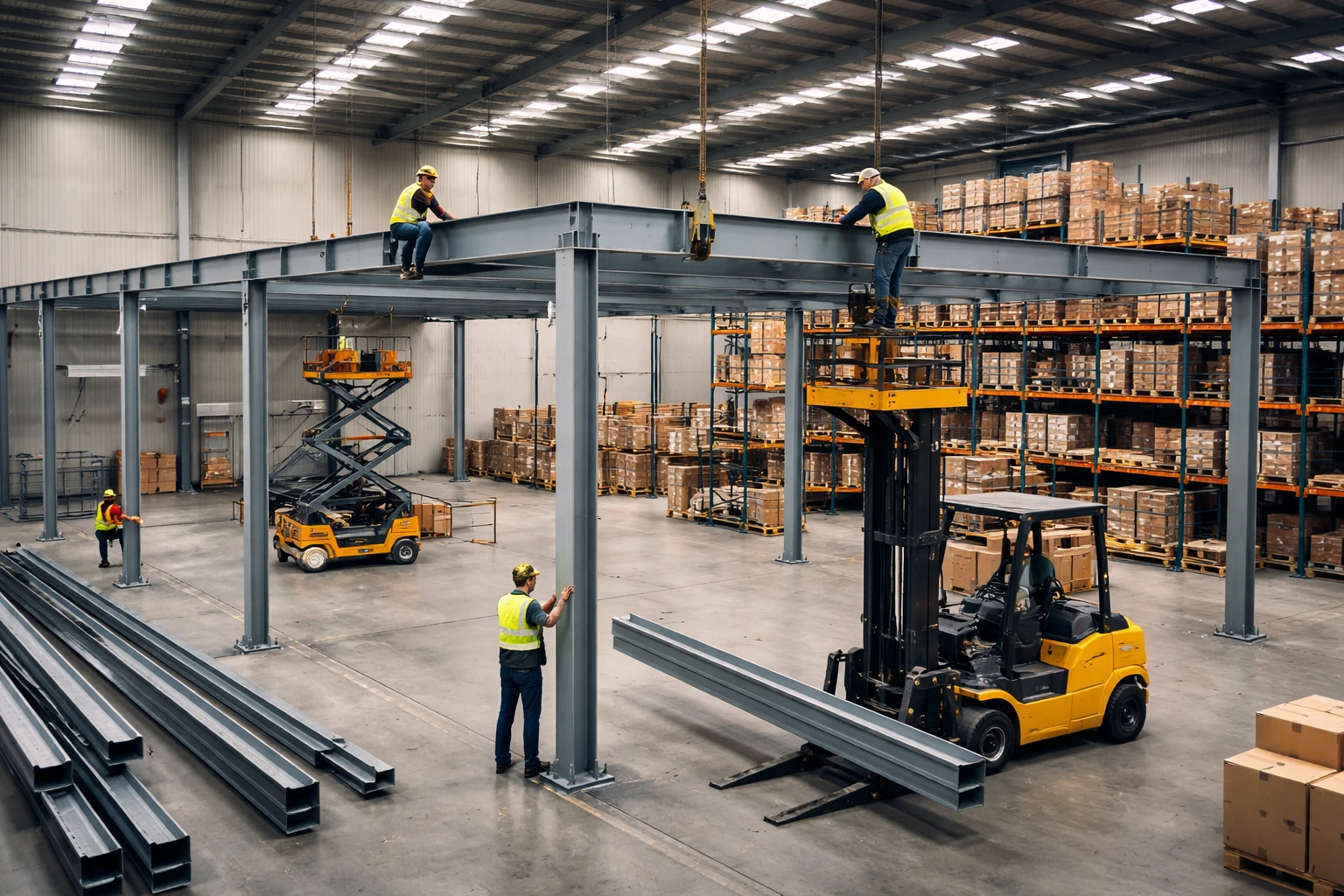
6. On-Site Installation
Installation is where the project finally becomes visible.
Most mezzanine floors are installed in a structured sequence to ensure safety and efficiency.
Step 1: Column Installation
Steel columns are anchored to the concrete slab using heavy-duty base plates and anchor bolts. Proper alignment is essential because the entire structure relies on these supports.
Step 2: Beam Placement
Primary beams are lifted into position and secured to the columns. Secondary beams are then added to distribute weight evenly across the platform.
Step 3: Decking Installation
The floor surface is installed over the beam structure. Depending on the application, this could include steel grating, plywood decking, or particle board flooring.
Step 4: Safety Features
Handrails, staircases, pallet gates, and edge protection systems are installed to ensure compliance and worker safety.
Depending on the size of the mezzanine, installation typically takes a few days to several weeks.
7. Final Safety Checks and Certification
Before the mezzanine becomes operational, it must undergo final inspections.
These checks confirm that:
- Structural components are correctly installed
- Safety barriers and railings meet compliance standards
- Staircases and access points are secure
- Load ratings are clearly marked
Once approved, the mezzanine is ready for use.
At this point, businesses often notice immediate improvements in space utilisation and workflow.
Common Mistakes to Avoid During Installation
While mezzanine floors are highly effective, problems can occur when projects are poorly planned or installed.
Some of the most common mistakes include:
- Underestimating load requirements
- Ignoring workflow and traffic patterns
- Installing inadequate safety features
- Choosing the wrong flooring materials
- Failing to plan for future expansion
Avoiding these issues requires proper planning and professional guidance. Our guide on common mezzanine floor mistakes to avoid explains these pitfalls in more detail.
Why Professional Installation Matters
Although mezzanine systems may appear straightforward, they involve complex engineering considerations.
Professional installation ensures:
- Structural integrity
- Compliance with Australian standards
- Safe working environments
- Long-term durability
In many cases, businesses also benefit from expert insights during the planning stage. Experienced installers understand how to design mezzanine layouts that improve productivity rather than simply adding square metres.
Transform Your Warehouse Space
If your warehouse feels cramped or inefficient, installing a mezzanine floor could be one of the most cost-effective upgrades available.
By utilising vertical space, businesses can expand storage capacity, improve workflow, and delay the need for costly relocations.
With the right planning, engineering, and professional installation, a mezzanine floor becomes more than just a platform—it becomes a strategic investment in operational efficiency.
If you're considering adding a mezzanine to your facility, the team at Factory Mezzanine Floors can guide you through every stage of the process, from design and engineering to installation and compliance.
- How to Maintain Your Mezzanine Floor for Maximum Longevity
- Ways to Reconfigure Your Mezzanine Floor as Your Business Grows
- Before & After: Transforming Warehouse Layouts with Mezzanine Floors
- How a Mezzanine Floor Increased Productivity by 40%
- Common Mistakes to Avoid When Installing a Mezzanine Floor
- Mezzanine Floors vs. Relocation: Which Saves More Money?
- 5 Signs Your Business Needs a Mezzanine Floor
- The Importance of Professional Engineering in Mezzanine Design
- How to Ensure Your Mezzanine Floor Meets Fire Safety Standards in Australia
- How to Ensure Your Mezzanine Floor Meets Fire Safety Standards