
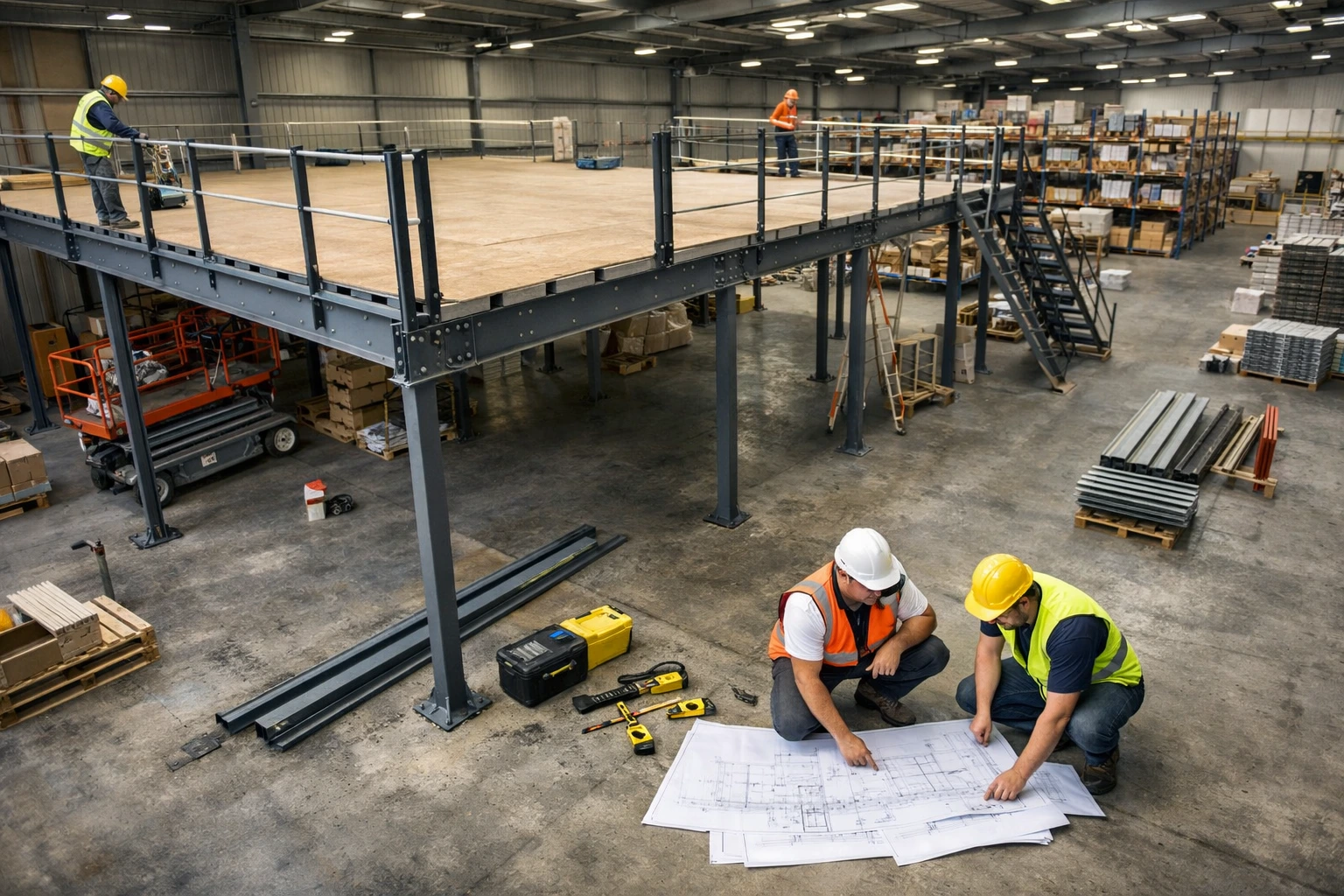
Your Complete Guide To Planning Mezzanine Floors in Australia
Adding a mezzanine floor is one of the most cost-effective ways to expand usable space in your warehouse, factory, or commercial facility — without relocating or doing major construction. But success starts with planning. Without a structured approach, you risk compliance delays, costly redesigns or a mezzanine that doesn’t meet your business needs.
This free planning checklist walks you step-by-step through everything you need before you install a mezzanine — from space evaluation to council approvals — and highlights useful resources along the way.
1. Define Your Purpose and Business Needs
Before drawing lines on plans, get clear on what you want to achieve:
- Are you expanding storage, adding office space, or creating a production area?
- Will the mezzanine support light loads (office/workstations) or heavy loads (pallets, machinery)?
- How frequently will staff access the new space?
Tip: Planning your purpose early helps your mezzanine supplier determine structural requirements and material specifications.
Checklist:
Identify primary function of mezzanine
Estimate current and future space needs
Note type of access required (stairs/goods lift)
Learn more about mezzanine usage: What Is a Mezzanine Floor? Complete Guide for Businesses ↗️
2. Measure Your Space and Clear Heights
Your available space and clearances are the foundations of any good mezzanine plan.
Key measurements:
- Total facility ceiling height
- Clear headroom above and below mezzanine (aim for ~2.1m+ headroom beneath and sufficient usable height above)
- Column locations and existing structural elements
- Floor slab condition
Checklist:
Measure clear heights
Document any obstructions
Check floor load capacity
Want detailed planning guidance? Grab the Mezzanine Planning Guide PDF from Factory Mezzanine Floors for free optionally with download.
3. Calculate Load Requirements
Mezzanine design must match the load it will carry — not just now, but in the future.
- Office use needs different engineering than pallet storage.
- Machines or heavy racking greatly increase load demands.
Professional engineers often use Australian standards such as AS 4100 and AS/NZS 1170 series to calculate loads safely.
Checklist:
Determine anticipated live loads
Define decking & beam specifications
Engage structural engineering for load certification
4. Understand Compliance & Council Approvals
In Australia, most structural mezzanine floors are considered building works. That means you must comply with the National Construction Code (NCC) and seek council approval.
Important compliance areas include:
- Building codes & fire safety standards
- Handrails and access safety (AS 1657, AS 1428)
- Accessibility/egress pathways
It's not just a legal step — approved mezzanines may add legitimate floor space to your property value and avoid expensive penalties later.
Checklist:
Check local council requirements
Prepare and submit plans
Engage qualified certifier
5. Design Access & Safety Into Your Plan
Safety isn’t an afterthought. Elevated platforms need smart design to protect workers and meet code.
Key safety elements:
- Stair access that meets Australian standards
- Handrails & balustrades
- Emergency egress and signage
- Slip-resistant surfaces and lighting
Check standards like AS 1657 (for stairways/platforms) to ensure full compliance.
Checklist:
Design compliant staircases
Specify rails & balustrades
Plan emergency exits
6. Advanced Design: Integration & Future Proofing
Modern mezzanines do more than add space — they enhance operations.
With thoughtful planning, you might include:
- Offices overlooking production lines
- Partitioned storage zones
- Integrated conveyor systems
- Lighting and climate control
Factory Mezzanine Floors regularly shares design trends that maximise workspace productivity.
Checklist:
Sketch zone layouts
Plan for future scalability
Account for HVAC/light systems
7. Choose the Right Supplier & Secure Quotes
Your supplier should offer more than steel and screws.
Great partners will:
- Provide engineered designs
- Handle council approval guidance
- Offer fabrication & installation
- Manage project end-to-end
Factory Mezzanine Floors specialises in tailored solutions for both small business and large project requirements.
Checklist:
Request multiple quotes
Review past project portfolios
Confirm project timelines
8. Plan Installation With Minimal Disruption
Mezzanine installation doesn’t need to shut down operations.
Checklist:
Agree staging plan
Identify temporary storage/relocation needs
Set clear milestones with installer
9. Maintenance & Long-Term Management
A mezzanine isn’t set-and-forget — it’s part of your workspace ecosystem.
Checklist:
Schedule periodic safety inspections
Track load changes over time
Update plans for future expansion
Download Your Free Checklist
Ready to implement?
Click here to download the free Mezzanine Floor Planning Checklist PDF and make your next mezzanine project smooth, compliant and cost-efficient.
Or contact the Factory Mezzanine Floors team for a personalised consultation and quote.
Call 1300 998 883
Email: [email protected]
Brisbane/Qld support nationally.
- How to Maintain Your Mezzanine Floor for Maximum Longevity
- Ways to Reconfigure Your Mezzanine Floor as Your Business Grows
- Before & After: Transforming Warehouse Layouts with Mezzanine Floors
- How a Mezzanine Floor Increased Productivity by 40%
- Common Mistakes to Avoid When Installing a Mezzanine Floor
- Mezzanine Floors vs. Relocation: Which Saves More Money?
- 5 Signs Your Business Needs a Mezzanine Floor
- The Importance of Professional Engineering in Mezzanine Design
- How to Ensure Your Mezzanine Floor Meets Fire Safety Standards in Australia
- How to Ensure Your Mezzanine Floor Meets Fire Safety Standards