
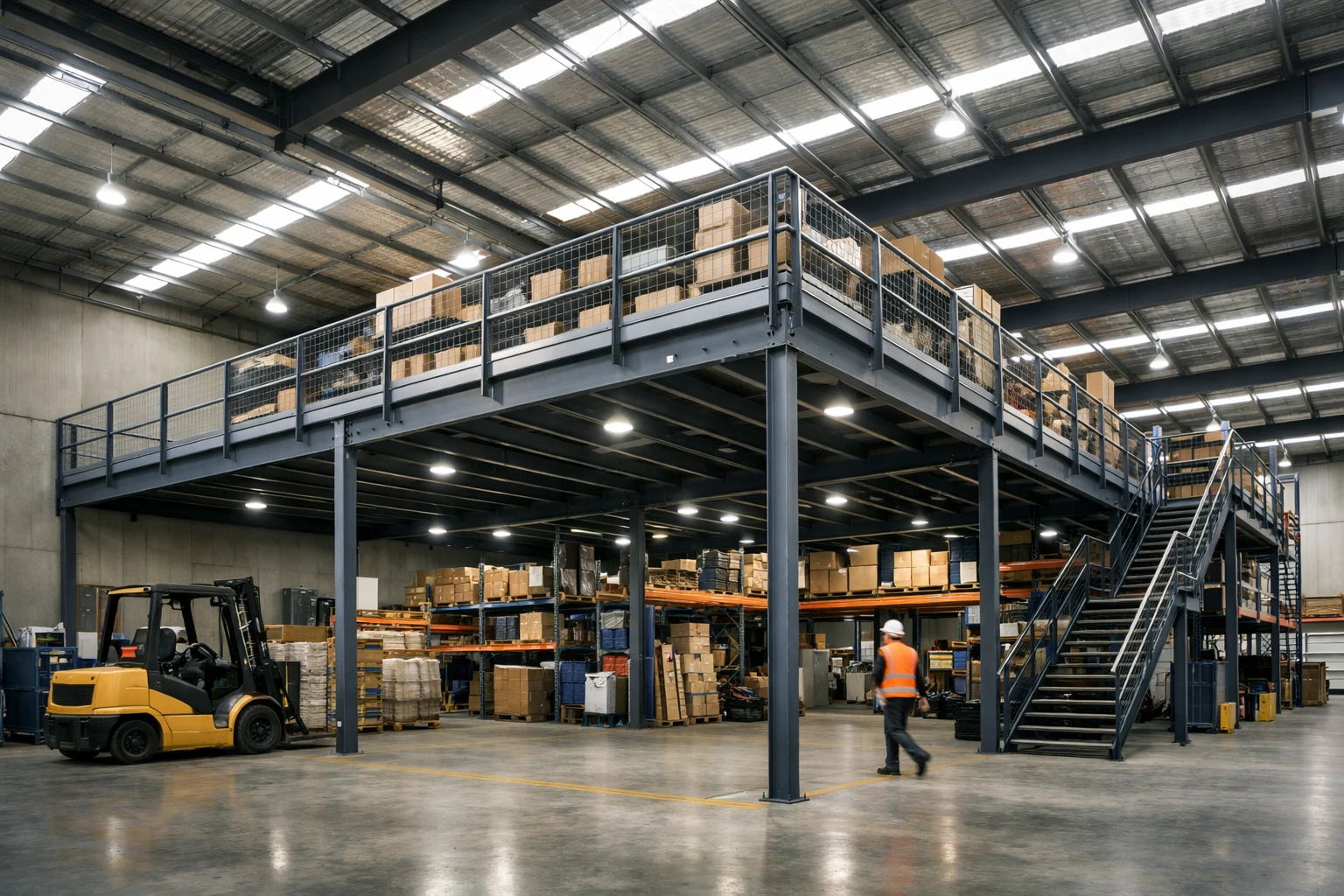
What is a Mezzanine Floor?
A mezzanine floor refers to an intermediate, freestanding level installed between a building’s ground floor and roof or ceiling. It’s designed to create additional usable space within the existing building footprint without the need for major extensions or relocation.
Unlike a full second storey, a mezzanine usually occupies only part of the overall floor area. This clever use of vertical space allows businesses to expand operations, storage, or office use in under-utilised overhead areas.
Why Mezzanine Floors Matter for Businesses
Modern industrial and commercial spaces — especially warehouses, factories, logistics centres, showrooms, and distribution hubs — often feature high ceilings. While valuable, this vertical space usually goes unused. Installing a mezzanine floor lets businesses capture that space and convert it into functional square metres without moving premises.
With rising property and rental costs in Australia, this space-maximising solution can be a cost-effective alternative to relocation or constructing new buildings — an increasingly attractive option for growing businesses.
How Mezzanine Floors Work
Structure and Materials
Mezzanine floors are primarily steel-framed structures, designed to be robust, adaptable, and compliant with building standards. The core components typically include:
- Steel Columns: Vertical supports transferring load safely to the ground.
- Primary Beams: Horizontal load-bearing members across the columns.
- Secondary Beams (Joists): Provide cross support for decking.
- Decking Surface: The floor surface, which may be particleboard, plywood, steel, or other industrial grade materials.
Because they are often free-standing and modular, mezzanine floors can be reconfigured or even relocated if business needs change, making them a flexible long-term asset rather than a fixed addition.
A Quick Note on Terminology
Though “mezzanine floor” comes from architecture and design terminology, in industrial contexts it generally refers to a semi-permanent platform that doesn’t count as an additional storey under many building codes but still provides valuable functional space.
Core Business Applications
Warehouse Storage
Increasing storage capacity without expanding the building footprint is one of the most common uses. Mezzanine floors let you stack shelving or racks above the main floor, freeing ground space for machinery and workflow.
Office or Support Space
In industrial settings, mezzanines can house offices, meeting rooms, staff break areas, or quality control zones — providing separation between administrative tasks and production spaces.
Production & Operations
Mezzanines can create new zones for packing, assembly, or specialised processes — effectively increasing capacity and flow without disrupting core operations.
Retail or Display Areas
Retail outlets or showrooms with high ceilings can use mezzanines for product displays, customer lounges, or extended shopping space.
Key Benefits for Business Owners
Installing a mezzanine floor offers strategic gains that go far beyond mere square metres.
Maximise Vertical Space
The most obvious advantage is making use of previously empty vertical space to create functional areas.
Cost-Effective Growth
Compared with moving to a larger property, building an extension, or leasing additional space, mezzanine installation is a fraction of the cost — often paying back the investment through improved efficiency and space reuse.
Operational Efficiency
Separating functions and organising workflow with dedicated mezzanine zones helps reduce congestion and optimise movement patterns on the main floor.
Versatility & Customisation
Mezzanines can be tailored — from storage systems to office spaces — ensuring right-fit solutions for various industries.
Improves Property Value
Adding a mezzanine floor effectively increases usable floor area, which can enhance building appeal and resale value should the business choose to sell or lease the property later.
Compliance, Approvals & Safety (Australia)
Building Code Requirements
In Australia, mezzanine floors must comply with the Building Code of Australia (BCA), which outlines minimum safety and structural standards. This typically includes engineering certification of load capacities and design.
Council Approvals
Whether formal council approval is needed often depends on the mezzanine’s size, use, and how it interacts with the building’s structure. Simple storage platforms may not require extensive approvals, whereas floors intended for regular occupation (like offices) often do.
Workplace Safety
Safe stair access, handrails, guardrails, and proper load ratings are mandatory for Australian industrial environments to protect staff and meet regulatory obligations.
Mezzanine Installation — What to Expect
Installing a mezzanine involves more than simply bolting steel beams together. A professional installation will typically include:
- Site Survey & Assessment: Precision measurement of height, headroom, slab condition, and site restrictions.
- Design & Engineering: Tailoring the mezzanine to your load requirements and spatial constraints.
- Approvals & Documentation: Council clearances and engineering certification where required.
- Manufacture & Fabrication: Off-site production of steel components for efficiency.
- Installation & Final Inspection: Site assembly, safety checks and commissioning.
Common Mezzanine Types
- Freestanding Steel Mezzanines: Highly adaptable and moveable within the facility.
- Rack-Supported Systems: Dual-purpose structures that integrate with shelving or racking.
- Structural Steel Platforms: Engineered for heavier loads and more demanding operational use.
The right choice depends on your space, load needs, and operational goals.
Final Thoughts
For many Australian businesses, especially those in industrial, warehousing, logistics, or high-ceiling commercial spaces, a mezzanine floor offers a smart, efficient, and cost-effective solution to expand usable area without the major costs or disruptions of relocation or construction. With proper design, compliance and installation, mezzanine floors can become foundational assets that support growth well into the future.
- How to Maintain Your Mezzanine Floor for Maximum Longevity
- Ways to Reconfigure Your Mezzanine Floor as Your Business Grows
- Before & After: Transforming Warehouse Layouts with Mezzanine Floors
- How a Mezzanine Floor Increased Productivity by 40%
- Common Mistakes to Avoid When Installing a Mezzanine Floor
- Mezzanine Floors vs. Relocation: Which Saves More Money?
- 5 Signs Your Business Needs a Mezzanine Floor
- The Importance of Professional Engineering in Mezzanine Design
- How to Ensure Your Mezzanine Floor Meets Fire Safety Standards in Australia
- How to Ensure Your Mezzanine Floor Meets Fire Safety Standards