
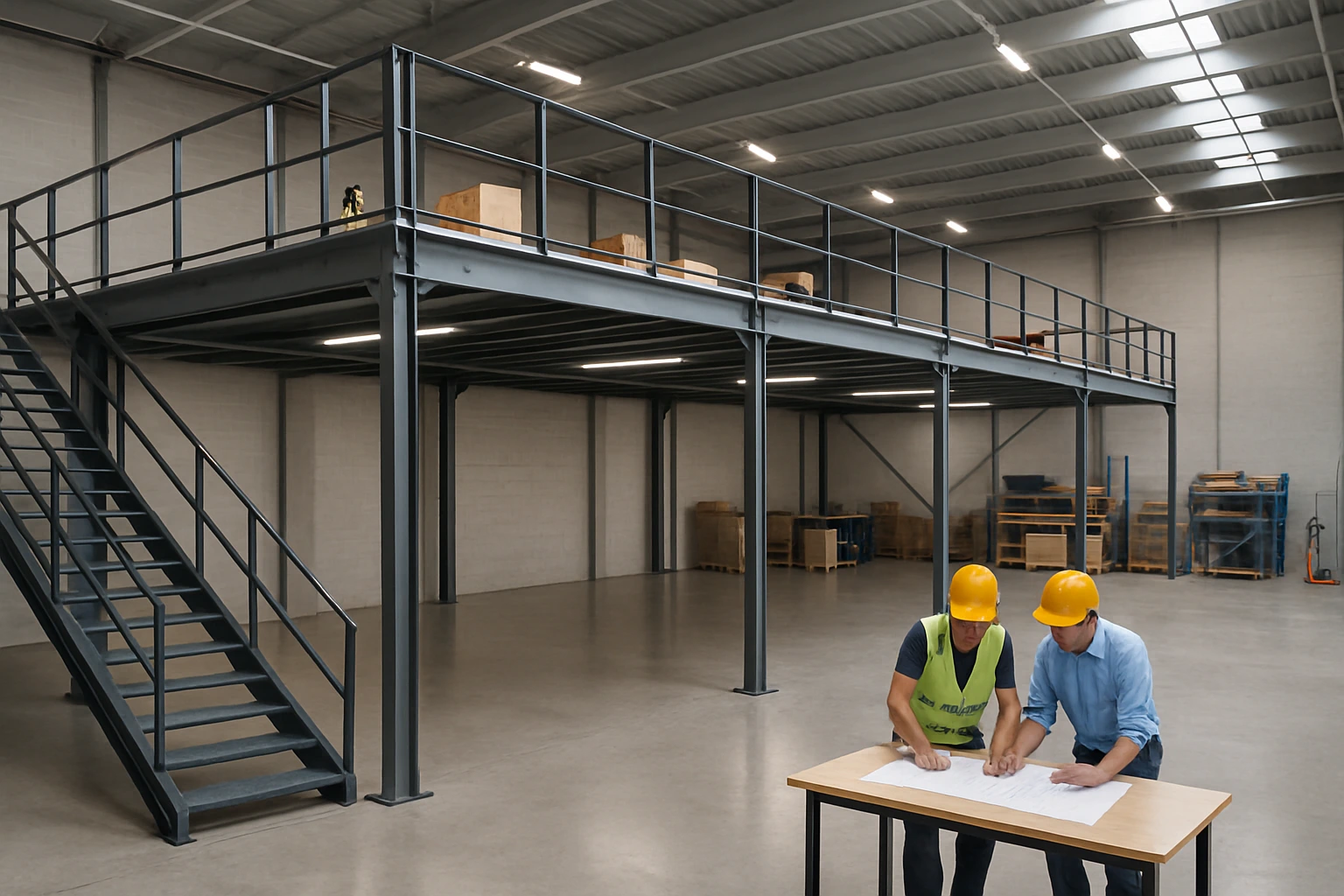
When your business begins to scale, the pressure on space, workflow, and logistics invariably builds. One of the smartest ways to accommodate growth is to revisit and reconfigure your existing mezzanine floor — that intermediate level inside your building that might have served one purpose yesterday, and needs to serve more today. Reconfiguring the mezzanine allows you to maximise your vertical space, streamline operations and adapt without relocating. In this article we’ll explore why you should consider reconfiguration (the benefits), how the engineering and compliance aspects matter, and finally provide a check-list you can use to guide your mezzanine reconfiguration project.
1. Benefits of Reconfiguring Your Mezzanine
Reworking your mezzanine floor can bring multiple advantages. Here are some of the key ones:
- Space optimisation & cost-effectiveness. Installing or reconfiguring a mezzanine is typically far cheaper and less disruptive than moving premises or building a large extension.
- Flexibility as your operations evolve. A well-designed mezzanine offers adaptability: storage today, offices tomorrow, or a mix. This modularity means your facility can grow (or shift) with you.
- Improved workflow and utilisation. By elevating one tier of activity (e.g., storage or packing) you free up the ground level for high-traffic tasks. This can lead to better organisation, fewer bottlenecks, and improved throughput.
- Added asset value and longevity. A professionally engineered mezzanine floor adds value to your facility and becomes a long-term asset—not just a short-term fix.
- Minimal disruption during change. If planned properly, reconfiguring a mezzanine can be managed with minimal disruption to operations, letting you keep trading while the work is done.
Given these benefits, reconfiguration is often a smart alternative to relocation. But to realise the upside fully, engineering and compliance can’t be overlooked.
2. Engineering & Compliance Essentials
A mezzanine might look like a simple elevated floor, but when you’re reconfiguring it to meet new growth demands, the engineering components become critical. Here are the main factors to keep front of mind:
- Structural load and design. The live-load (people, equipment, shelving) and dead-load (structure itself) must be assessed. For example, an office mezzanine may need 2.5–3.0 kPa while heavy storage may demand up to 5–7.5 kPa.
- Professional engineering certification. You’ll want an engineer who can supply drawings, load calculations, and certificate of compliance. As noted by companies such as Factory Mezzanine Floors, this is essential to ensure safety and regulatory approval.
- Integration with existing structure. Is the mezzanine freestanding, or tied to the building frame? Each option has pros and cons. For example, tying into a frame may reduce steel cost but may risk overload if the building wasn’t designed for it.
- Compliance with building codes / council approval. In Australia, mezzanines are often subject to building code provisions and local council regulation. You’ll need to check approval pathways, especially if you’re changing usage (e.g., converting storage platform to office).
- Safety, egress & fire protection. With a new mezzanine level comes new responsibilities: stairs, handrails, guardrails, emergency exits, possibly fire-rated materials. These must be integrated into the design.
- Future readiness. Since you’re reconfiguring in the growth phase, consider future expansions – leaving enough headroom, clearance, load capacity and flexibility for a second upgrade.
By aligning your reconfiguration with strong engineering and compliance processes you mitigate risk, ensure longevity and get the performance payoff your growing business needs.
3. Reconfiguration Checklist
Here’s a practical checklist you can run through to guide your mezzanine reconfiguration project, structured in stages: Planning → Design/Engineering → Installation → Post-Go-Live.
Planning Stage
- Assess your current mezzanine usage: what is working, what isn’t?
- Forecast growth: how much storage/office/production space will you need in 12-24 months?
- Map ground-level operations: what activities will shift under/above the mezzanine?
- Review clearances: confirm height, headroom, floor load capacity, traffic patterns beneath.
- Vs relocation: compare cost/time disruption of reconfigure vs moving premises.
- Set budget and timeframe: including allowance for downtime, installation, internal fit-out.
Design/Engineering Stage
- Engage qualified structural engineer: obtain drawings, calculations, certification.
- Confirm load requirements and material spec (steel beams, decking, handrails).
- Check for any building code / council approval requirements: usages, egress, fire rating.
- Determine mezzanine access: will you need stairs, lift/goods lift, ramp?
- Plan for integration: lighting, services, HVAC, wiring if offices go above.
- Choose modular/flexible design: allow for future expansion or re-use.
- Finalise layout: clear spans, posts placement, below-mezzanine workflow.
- Review safety features: guardrails, fall protection, pallet gates if using storage use.
- Secure procurement of materials and selection of installer.
Installation Stage
- Coordinate with installer: scheduling to minimise disruption to business.
- Prepare site: clear required area, protect other operations.
- Monitor construction: ensure engineer’s drawings are followed, safety checks.
- Minimise downtime: keep operations ongoing where possible.
- Inspections: structural check, safety rails, egress paths.
- Commissioning: floor load testing if required, full lighting/service integration.
Post-Go-Live / Operation Stage
- Update facility layout plan: clearly mark mezzanine zones, stair access, emergency exits.
- Load and usage monitoring: ensure that usage remains within engineered load limits.
- Workflow optimisation: train staff on how to use the mezzanine level effectively.
- Maintenance schedule: check structural connections, handrails, flooring surface.
- Adapt and review: after 3-6 months review how well the reconfiguration supports operations – adjust if needed.
- Document everything: keep drawings, certifications, maintenance logs for auditing and future resale value.
4. Linking Growth to Reconfiguration: How It All Ties Together
As your business grows, the resources you manage (inventory, office staff, production lines) will place fresh demands on your facility. Reconfiguring the mezzanine is often the most agile solution to address that growth: you’re leveraging what you already own (the building shell, utilities, location) rather than moving to a bigger, more expensive site.
By reconfiguring, you align spatial design with operational flow: for instance, moving high-volume storage upstairs and freeing the ground level for dispatch; or creating a mezzanine office zone while retaining production below. With sound engineering, you ensure that the mezzanine isn’t a compromise but a long-term asset. And with a structured checklist, you avoid surprises, ensure compliance and create a facility that supports the next stage of business rather than holds it back.
5. Final Thoughts
Reconfiguring your mezzanine floor is not just a structural project—it’s a strategic enabler for growth. By linking benefits (space, efficiency, cost-control) with solid engineering and a practical check-list, you position your facility as a growth platform. Whether you are in a warehouse, manufacturing plant, distribution centre or even a hybrid production/office space, the same principles apply: evaluate, engineer, install, operate.
Start with your current state and your growth forecast; engage the right experts; plan thoroughly; and once the reconfig is live, keep reviewing how it supports your operations. If you do that, your mezzanine will not simply be a floor, but a meaningful layer of your strategic infrastructure.
FAQs
Where Does Your Business Operate?
We deliver Custom mezzanines across Queensland including Brisbane, Gold Coast, Sunshine Coast, Toowoomba, Ipswich, Logan, Redlands, Bundaberg, Baringa, Coolum, Cooyroy, Redbank, Yatala Rockhampton, Mackay, Townsville, Cairns and regional QLD.
What mezzanine load ratings can you design for (office vs palletised storage)?
We design to your use case—office live loads through to heavy palletised storage—engineered to AS/NZS 1170 and documented in your certification pack.
Do I need engineering if it’s just for storage?
Yes. Every mezzanine—regardless of use—must be structurally certified for safety, compliance, and long-term use.
Can the design allow for future expansion?
Yes. We can design your mezzanine for future expansion.
- How to Maintain Your Mezzanine Floor for Maximum Longevity
- Ways to Reconfigure Your Mezzanine Floor as Your Business Grows
- Before & After: Transforming Warehouse Layouts with Mezzanine Floors
- How a Mezzanine Floor Increased Productivity by 40%
- Common Mistakes to Avoid When Installing a Mezzanine Floor
- Mezzanine Floors vs. Relocation: Which Saves More Money?
- 5 Signs Your Business Needs a Mezzanine Floor
- The Importance of Professional Engineering in Mezzanine Design
- How to Ensure Your Mezzanine Floor Meets Fire Safety Standards in Australia
- How to Ensure Your Mezzanine Floor Meets Fire Safety Standards