
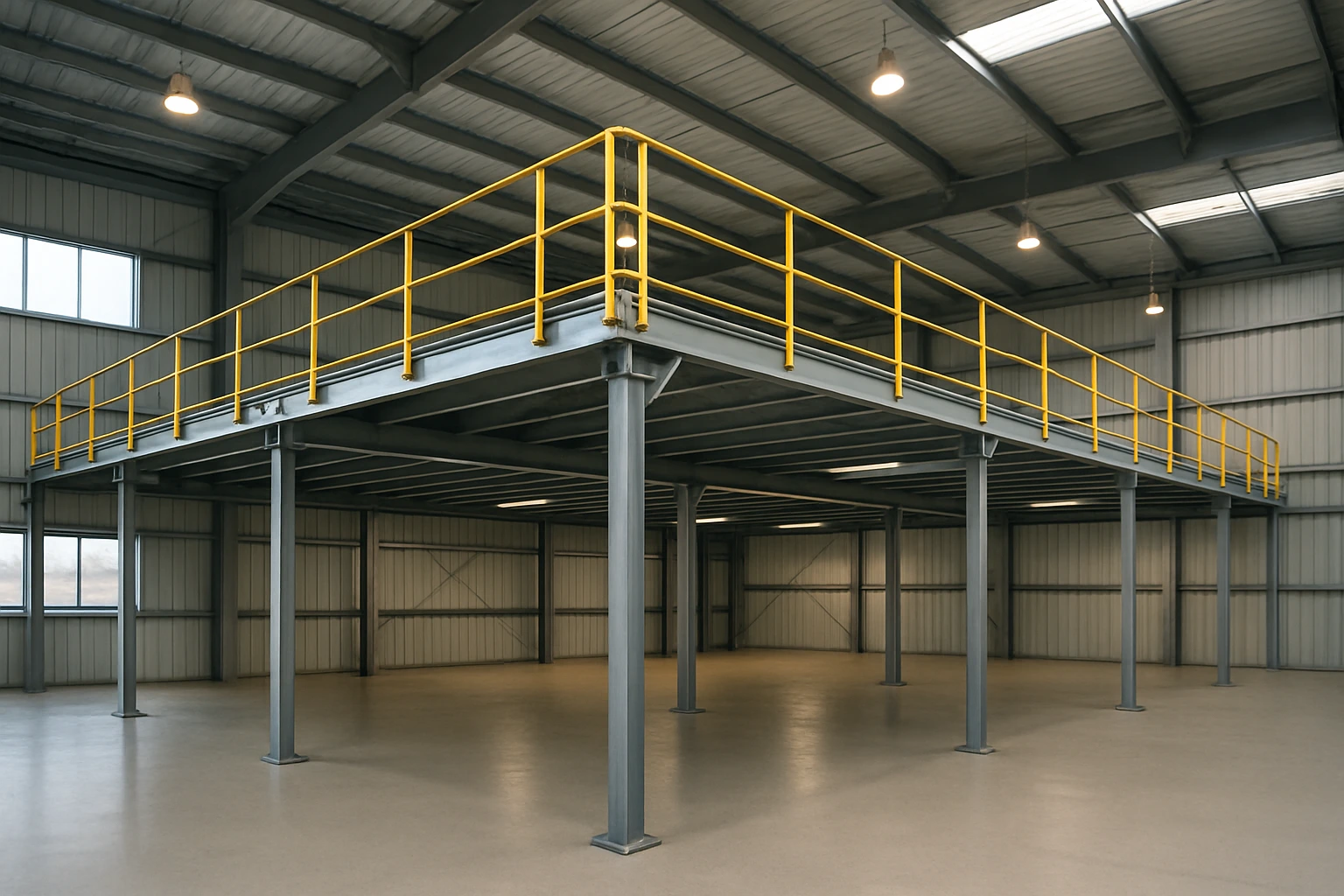
In today’s competitive business environment, Australian companies are investing in smarter workspaces that maximise every square metre of floor space. Mezzanine flooring has emerged as a core solution for organisations seeking to expand capacity, improve functionality, and redefine the way teams interact in industrial and commercial environments. With rising property costs, spatial limitations and agile organisational needs, mezzanine platforms — when thoughtfully designed — can transform how workspaces perform and feel.
1. The New Era of Workspace Flexibility
One of the biggest trends in mezzanine flooring design is flexibility. Modern mezzanines are no longer static platforms built only for storage — they are modular systems that can be reconfigured, expanded or relocated as business needs evolve. Unlike permanent construction projects, these adaptable systems allow organisations to adjust layouts with minimal disruption. For example, a mezzanine initially installed for extra stock storage can later convert into office space, collaborative zones or breakout areas with minimal structural change. This flexibility is particularly important for businesses anticipating growth or shifts in operations — and is a defining trend in the Australian market.
Trend Take-out: Designing mezzanine floors with future flexibility in mind saves both time and money, and supports changing workflow requirements without major renovation.
2. From Functional to Social: Collaborative Mezzanine Zones
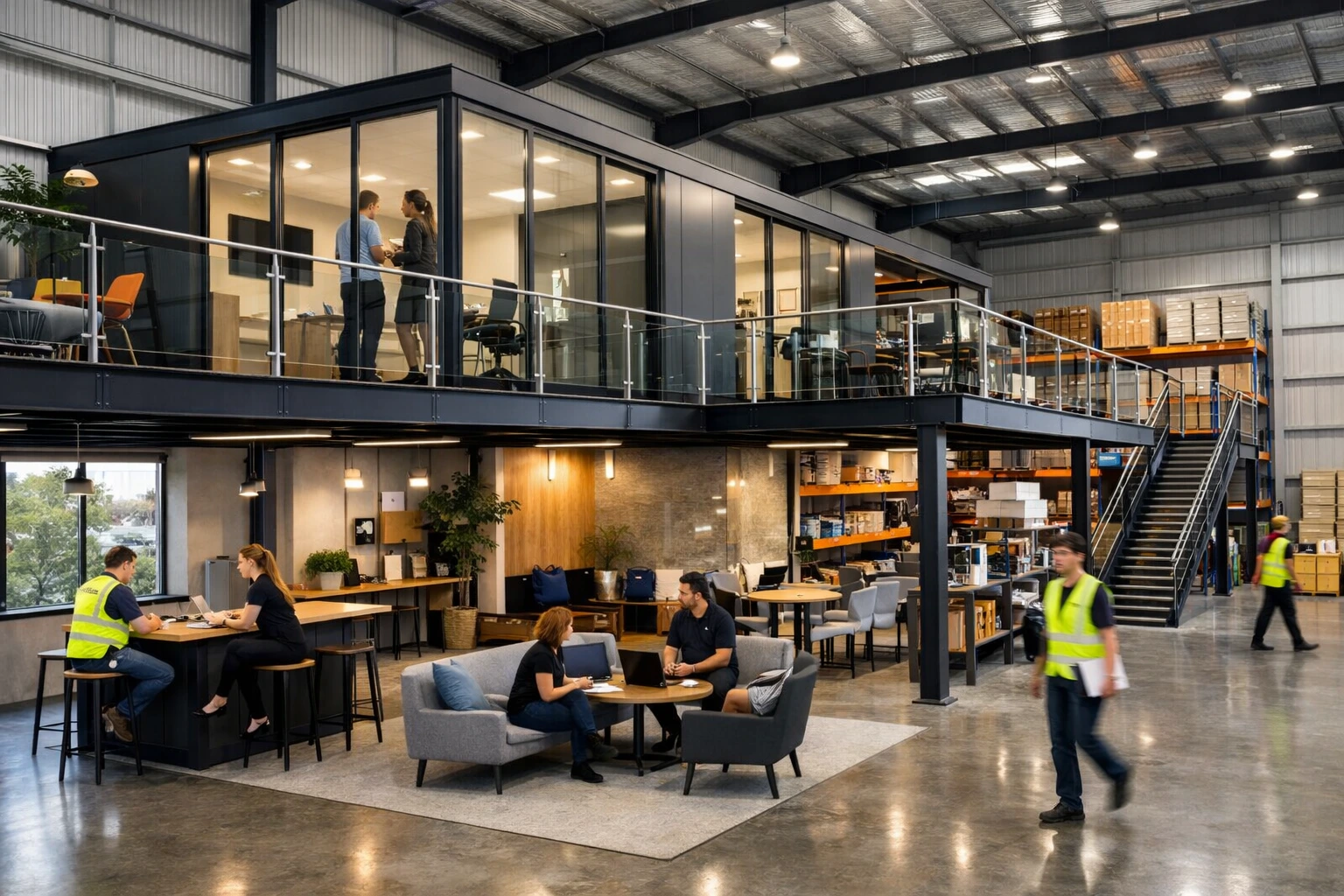
Modern mezzanine designs put a heavier emphasis on collaboration and connectivity. Moving beyond simple elevated storage, designers are creating mezzanines that act as hubs of teamwork — think open meeting spaces, glass-encased project rooms, and flexible desks for cross-department interaction. Research shows that mezzanines designed with collaborative elements can enhance productivity and workplace culture by visually and functionally connecting teams across hierarchical boundaries.
Collaborative mezzanine zones often include features such as:
- Glass balustrades to maintain sightlines and natural light
- Integrated breakout spaces with casual seating
- Acoustic planning for focused team discussions
- Clear circulation routes to avoid workflow congestion
This design prioritises human-centred work environments and aligns with global trends in workplace experience.
3. Smarter Integration with Technology and Storage
Another unmistakable trend is the integration of technology and storage optimisation within mezzanine systems. With warehouses and factories increasingly adopting automation and digital tools, mezzanines are being designed to support these technologies — from smart shelving and automated picking systems to integrated goods lifts and safety-compliant pallet gates. This means mezzanine levels are not simply remote floors; they are interactive operational platforms.
For example:
- Mezzanines configured with automated storage and retrieval systems (AS/RS)
- ERP-linked operational zones on upper levels
- Embedded data cabling and power systems for real-time inventory management
These innovations ensure mezzanines support workflow efficiency, not just spatial expansion.
4. Aesthetic and Workplace Design Trends
While functionality remains a priority, aesthetics are increasingly influential too — especially for mezzanines that serve as office or client-facing spaces. Minimalist design, modern materials and purposeful lighting are in demand. A few notable design directions include:
- Mixed materials: Steel frames with timber decking or polished concrete finishes
- Open ceilings and exposed structures for a modern industrial vibe
- Glass partitions that maintain visual openness without sacrificing sound privacy
- Greenery and biophilic elements to improve employee wellbeing
These design choices aren’t just visually pleasing — they contribute to improved morale and brand perception, particularly in environments where mezzanines intersect with office functions.
5. Case Studies: Mezzanine Transformed
Factory Mezzanine Floors showcases how effective design can reshape workspaces. A recent project involved a Sydney manufacturer constrained by limited ground space but facing increasing production demands. Rather than relocating, the business invested in a dual-level mezzanine system that increased usable floor area by approximately 40%, improved the workflow between production and administration, and did so with zero operational downtime — a powerful illustration of mezzanine impact without relocation upheaval.
Before: Crowded production floor, limited storage and workshop overlap.
After:
- A dedicated upper mezzanine level for workshop and office tasks
- Clear ground-level operations with expanded workflow room
- Enhanced storage capacity and accessibility
- Improved team collaboration across levels
This case mirrors a broader movement: industrial spaces evolving into multifunctional work environments through mezzanine design.
6. Reconfiguration and Reuse: The Sustainable Edge
Sustainability is becoming practical design currency. When businesses choose mezzanine flooring over expanding facilities or relocating to larger premises, they reduce material waste, minimise construction emissions and use existing vertical space more efficiently. Moreover, many systems are designed to be deconstructed and reconfigured for new buildings or functional needs, advancing circular design principles.
Sustainability also connects to operational efficiency: better traffic flow, reduced energy consumption from pooled operations, and fewer disturbances that can impact productivity.
7. Practical Reconfiguration in Action
Reconfiguration isn’t theoretical. Many Australian companies are rethinking how mezzanines support their workflow:
- Expanding mezzanine footprints to match growth in inventory
- Converting storage mezzanines to office and training areas
- Adding safety and accessibility features like ramps and elevators
- Integrating environmental controls for specialised work
These transformations reflect the trend of dynamic layouts that cater to evolving business strategies — not fixed infrastructures.
8. Compliance and Safety: Design Doesn’t Compromise
While design flair and functionality are essential, Australian mezzanine projects must adhere to strict building regulations and safety standards. Working with an experienced local provider like Factory Mezzanine Floors means designs are not only creative but compliant — from engineering specifications to council approval management.
This ensures:
- Reliable load-bearing design for specific operational needs
- Safe staircases, railings and access systems
- Fire compliance and occupational safety measures
- Smooth council approval and certification processes
Compliance doesn’t hinder innovation — it ensures longevity and peace of mind.
9. What Comes Next in Mezzanine Design?
Looking ahead, mezzanine designs will likely push further into smart systems, adaptive materials, and integrated digital infrastructure. We can expect:
- IoT connectivity for operational optimisation
- Reconfigurable modules that adapt via plug-and-play components
- Enhanced collaborative design that caters to hybrid work models
- Sustainable materials and lifecycle thinking
These directions reinforce mezzanine flooring as a catalyst for modern, productive and future-ready workspaces.
Conclusion: Design That Delivers Value
In modern Australian workplaces — whether warehouses, factories, distribution centres or creative offices — mezzanine flooring has matured into a cornerstone design strategy. The latest trends prioritise flexibility, collaboration, aesthetic value, smart tech integration and sustainability. Combined with practical reconfiguration and strong case study outcomes, these trends show that mezzanines are more than added layers — they are strategic assets that drive efficiency, adaptability and workplace satisfaction. Whether you’re expanding operations or redefining workspace dynamics, mezzanine flooring is poised to deliver lasting value.
FAQs
Where Does Your Business Operate?
We deliver Custom mezzanines across Queensland including Brisbane, Gold Coast, Sunshine Coast, Toowoomba, Ipswich, Logan, Redlands, Bundaberg, Baringa, Coolum, Cooyroy, Redbank, Yatala Rockhampton, Mackay, Townsville, Cairns and regional QLD.
What mezzanine load ratings can you design for (office vs palletised storage)?
We design to your use case—office live loads through to heavy palletised storage—engineered to AS/NZS 1170 and documented in your certification pack.
Do I need engineering if it’s just for storage?
Yes. Every mezzanine—regardless of use—must be structurally certified for safety, compliance, and long-term use.
Can the design allow for future expansion?
Yes. We can design your mezzanine for future expansion.
- How to Maintain Your Mezzanine Floor for Maximum Longevity
- Ways to Reconfigure Your Mezzanine Floor as Your Business Grows
- Before & After: Transforming Warehouse Layouts with Mezzanine Floors
- How a Mezzanine Floor Increased Productivity by 40%
- Common Mistakes to Avoid When Installing a Mezzanine Floor
- Mezzanine Floors vs. Relocation: Which Saves More Money?
- 5 Signs Your Business Needs a Mezzanine Floor
- The Importance of Professional Engineering in Mezzanine Design
- How to Ensure Your Mezzanine Floor Meets Fire Safety Standards in Australia
- How to Ensure Your Mezzanine Floor Meets Fire Safety Standards