
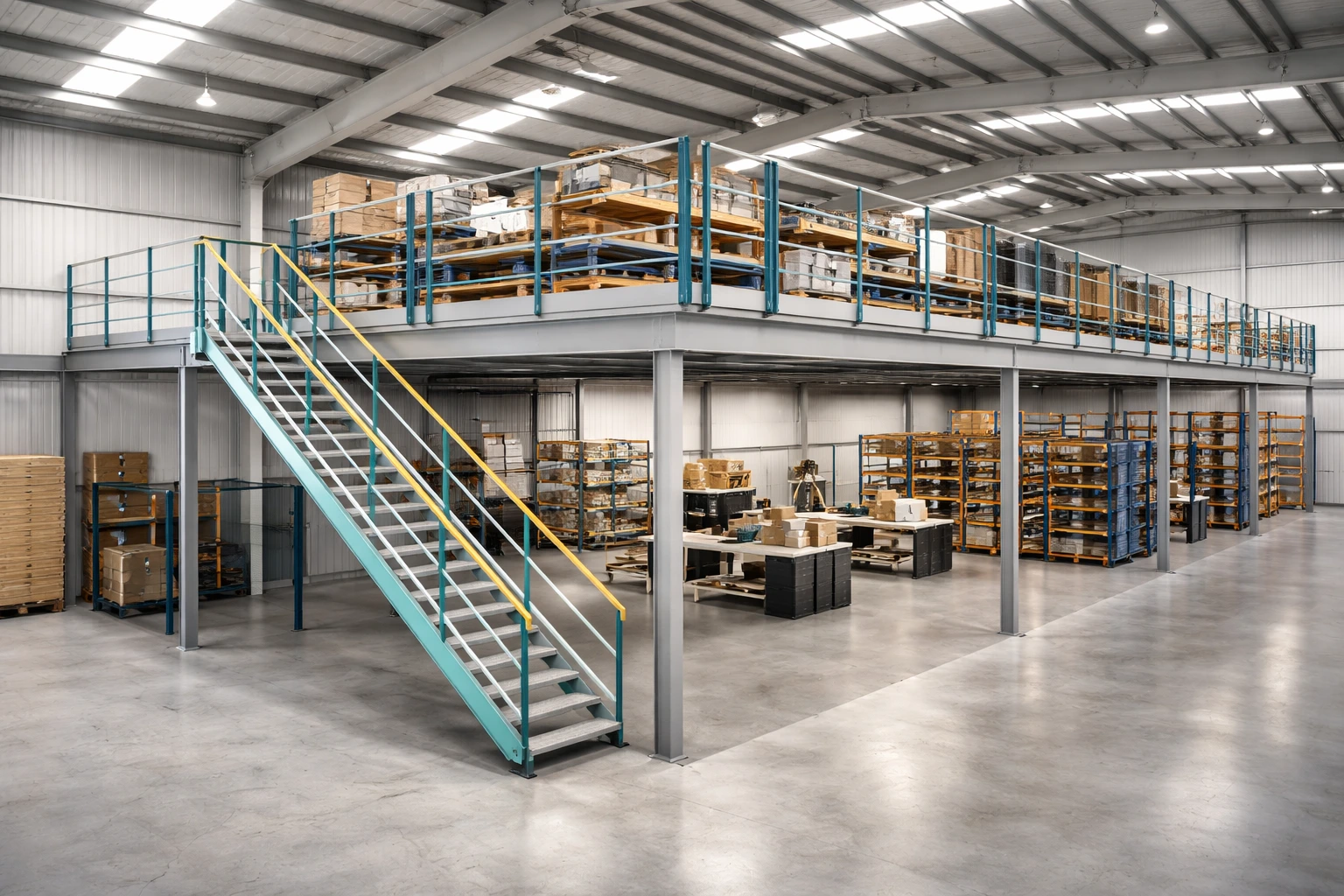
A mezzanine floor can be a smart way to multiply your usable space, but its value — for storage, offices or warehouse operations — depends on how well you maintain it. Regular upkeep not only preserves structural integrity, it also safeguards safety, keeps load capacity reliable, and enables future reconfigurations. Below are key practices to help you get the most out of your mezzanine over time.
1. Stick to a Routine Inspection Schedule
- Frequent visual checks by site staff. Walk the mezzanine monthly or quarterly and look out for obvious issues: loose bolts, surface damage, rust on metalwork, uneven decking, or loose handrails. These small problems, if ignored, tend to grow into bigger ones.
- Annual detailed inspections by qualified professionals. At least once a year, have a certified engineer or experienced installer inspect the structure thoroughly — including load-bearing posts, beams, decking, staircases and safety features — to verify there’s no hidden structural fatigue or compliance issues.
- Document results. Keep a log of each inspection and any maintenance done. This becomes very useful if you reconfigure the floor or need certification for compliance or resale.
2. Maintain Cleanliness — Safety & Longevity Go Hand in Hand
A clean mezzanine isn’t just about appearance; it has real impact on safety and durability.
- Remove clutter and unnecessary stock or equipment — heavy, uneven loads can stress the floor.
- Clean up spills (like oil, chemicals, dust) immediately, especially on metal surfaces. Spills can lead to corrosion or slippery hazards.
- Sweep or dust regularly to prevent debris build-up that could hide defects or contribute to deterioration.
Good housekeeping makes your mezzanine safer, prolongs its structural life, and also makes inspections easier and more effective.
3. Check Safety Features: Railings, Stairs, Access & Edge Protection
Safety features like staircases, guardrails and edge protections are essential — but they need checking too.
- Confirm handrails, balustrades and guardrails remain firmly attached, stable and free of rust. Edge protection must meet height and infill requirements if there’s a drop — especially important under Australian workplace regulations.
- If your mezzanine has stairs or ladders, make sure they comply with standards for rise, tread depth, head clearance and overall safety.
- Ensure clear, unobstructed access and egress, including emergency exit routes, fire-safe materials and appropriate lighting. These are essential for compliance with building safety codes.
4. Honor Load Capacity — Never Overload
Perhaps the most critical aspect of mezzanine floor maintenance is ensuring you don’t exceed its design load capacity.
- Know the floor’s rated capacity (for example, many light-duty mezzanines are designed for about 350–500 kg per square metre, while heavier-duty ones may support up to 1000 kg/m² or more, depending on design).
- Track what you store upstairs. Heavy or concentrated loads (e.g. pallets, machinery, dense racks) should be distributed so they don’t exceed allowable stresses.
- Display clear load capacity signage — especially if the mezzanine is used for storage or heavy loads. This reduces risk of overloading as operations change or staff come and go.
- If operations or storage needs change (e.g. heavier stock, machinery, or re-use of the mezzanine), consider having the structure re-assessed or re-engineered.
5. Prompt Repairs & Rust/Corrosion Management
Even well-built mezzanines age — wear, environmental factors, moisture, dust and heavy use can lead to problems. The key is prompt repairs.
- If you spot rust, corroding steel, loose bolts or damaged decking — address them immediately. Rust compromises load-bearing strength and can spread quickly.
- Replace worn-out floor panels, old or bent beams, damaged guardrails or stair parts. Don’t patch over serious issues — replacing components preserves safety and value
- Use protective coatings (e.g. paint, galvanising) on steel to reduce corrosion over time — especially if environmental conditions are harsh (e.g. moisture, chemical exposure, coastal salt air). This helps extend the lifespan of the structure.
6. Plan for Safe Reconfiguration — As Business Grows or Needs Change
One of the big advantages of a mezzanine floor is flexibility. But reconfiguring — changing layout, adjusting storage racks, repurposing areas — means you need a maintenance mindset that accounts for engineering and safety.
- Before reconfiguration, have a qualified engineer assess whether your planned changes comply with structural and load requirements (especially if you add heavier loads, change spacing, or modify layout).
- After reconfiguration, update your facility layout plans, load-capacity signage, access/egress routes, and any compliance documents or certifications. A reconfigured mezzanine effectively becomes a ‘new’ installation in regulatory terms.
- Incorporate reconfiguration checks into your ongoing maintenance schedule — inspect all connections, rails, stairs, flooring and load distribution after major changes.
7. Stay Compliant — Meet Australian Standards & Safety Regulations
In Australia, mezzanine floors must comply with relevant building codes and standards, especially when used for industrial, commercial or public purposes.
- Key standards to consider include load-capacity design standards (e.g. under structural design codes), platform, walkway and stair regulations (for example, requirements for handrail height, stair geometry or edge protection), and accessibility where applicable.
- Ensure fire safety, lighting, safe access/egress, and emergency exit compliance if your mezzanine is part of a workplace or storeroom accessed by staff.
- Maintain documentation: drawings, certifications, load-rating signs, inspection reports and any alterations — these are important for compliance, insurance, audits and future resale.
8. Benefits of Proactive Maintenance — Safety, Longevity & Value
When you commit to regular checks, maintenance, and compliance, the benefits go beyond a safe mezzanine.
- Longer lifespan. With timely repairs, repainting, cleaning and inspections, a mezzanine can last decades — delivering value far beyond a one-off installation.
- Reduced downtime. Catching issues early (before bolts loosen, before rust spreads, before decking warps) avoids unexpected closures or costly repairs that disrupt operations.
- Continued compliance and safety. Especially in workplaces, maintaining up-to-date compliance ensures you meet WHS standards, avoid legal risk, and protect staff.
- Flexibility over time. With modular components and careful documentation, you can reconfigure your mezzanine as your business grows — without compromising safety or load capacity.
- Resale or lease-value. A well-documented, well-maintained mezzanine adds value to the property or facility, making it more attractive to tenants or buyers.
Final Thoughts
A mezzanine floor is often a long-term investment — but like any asset, its value depends on how well it’s cared for. By building a simple maintenance schedule around inspections, cleanliness, load management, repairs and compliance, you can ensure your mezzanine remains safe, functional and adaptable for years to come.
If your business is based in Australia (like yours likely is), make sure to follow local standards for structural design, stairways, guardrails and fire / safety compliance. And whenever you reconfigure or change usage, treat the mezzanine as though it’s a new installation: reassess, inspect and document.
With the right maintenance approach, your mezzanine floor won’t just keep standing — it will remain a robust, flexible asset that contributes to the efficiency, safety and value of your facility.
FAQs
Where Does Your Business Operate?
We deliver Custom mezzanines across Queensland including Brisbane, Gold Coast, Sunshine Coast, Toowoomba, Ipswich, Logan, Redlands, Bundaberg, Baringa, Coolum, Cooyroy, Redbank, Yatala Rockhampton, Mackay, Townsville, Cairns and regional QLD.
What mezzanine load ratings can you design for (office vs palletised storage)?
We design to your use case—office live loads through to heavy palletised storage—engineered to AS/NZS 1170 and documented in your certification pack.
Do I need engineering if it’s just for storage?
Yes. Every mezzanine—regardless of use—must be structurally certified for safety, compliance, and long-term use.
Can the design allow for future expansion?
Yes. We can design your mezzanine for future expansion.
- How to Maintain Your Mezzanine Floor for Maximum Longevity
- Ways to Reconfigure Your Mezzanine Floor as Your Business Grows
- Before & After: Transforming Warehouse Layouts with Mezzanine Floors
- How a Mezzanine Floor Increased Productivity by 40%
- Common Mistakes to Avoid When Installing a Mezzanine Floor
- Mezzanine Floors vs. Relocation: Which Saves More Money?
- 5 Signs Your Business Needs a Mezzanine Floor
- The Importance of Professional Engineering in Mezzanine Design
- How to Ensure Your Mezzanine Floor Meets Fire Safety Standards in Australia
- How to Ensure Your Mezzanine Floor Meets Fire Safety Standards