
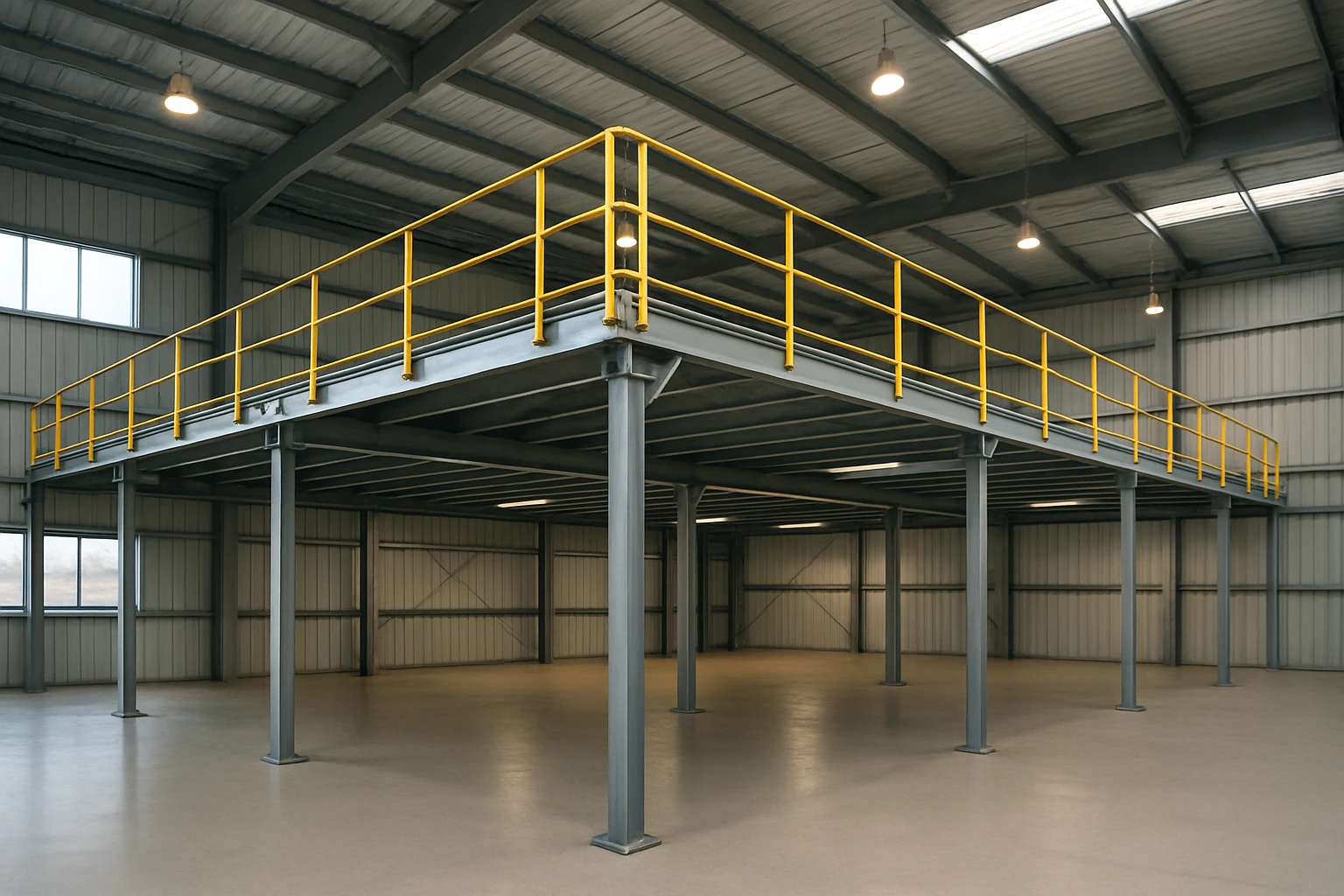
Introduction: The Changing Shape of Warehousing
In an era when operational agility and space efficiency mean the difference between profit and stagnation, warehouse design is rapidly evolving. The traditional single-storey shed with high ceilings often hides a huge amount of unused vertical space — volume that, until recently, remained empty. But that’s changing. More and more businesses are discovering the power of mezzanine floors to multiply usable space, without the cost or disruption of building extensions or relocating.
One company leading this shift is Factory Mezzanine Floors (FMF), an Australian firm providing engineered mezzanine solutions for both large-scale industrial operations and compact small-business facilities. Their approach exemplifies why mezzanine floors are not a trend — but a durable, future-proof answer to warehousing challenges.
In this article, we explore the broader trend toward mezzanine adoption, outline the benefits, highlight industry-specific use cases, and explain why mezzanines are here to stay.
The Rise of Mezzanine Floors: A Growing Trend
High-ceilinged warehouses are plentiful globally, yet for decades much of their vertical volume has remained untapped. As demand for storage, order-picking, and flexible workspace has increased, operators have looked for ways to “build up” rather than “build out.”
Mezzanine floors — intermediate levels installed between the warehouse floor and the roof — provide precisely that. They leverage existing overhead space to create functional floor area, turning previously wasted air-space into valuable real estate.
In Australia, firms such as Factory Mezzanine Floors are responding to increased demand from businesses facing expansion — whether for storage, logistics, manufacturing, or office / admin needs. Their growth (over 150 mezzanines delivered since 2018) reflects a broader industry shift: warehouse owners and managers are recognising mezzanine floors not as a temporary “quick fix,” but as a strategic component in long-term warehouse design.
Why Mezzanine Floors Deliver: Key Benefits
Dramatically More Space — Without Moving
One of the most compelling advantages of mezzanine floors is their ability to increase usable space — often doubling or significantly boosting warehouse capacity — without expanding the building’s footprint or relocating.
By exploiting vertical space, mezzanine floors make warehouses more efficient, utilising “air space” that otherwise goes to waste.
This vertical expansion is especially valuable for businesses operating on limited land, those leasing property, or those wanting to avoid the cost and disruption associated with building extensions or relocation.
Cost-Effectiveness vs Traditional Expansion
Compared with building a new facility or extending existing premises, mezzanine floors are far more economical. The materials, design, fabrication, and installation are typically far less expensive than structural additions or new builds — and installation can be swift, causing minimal disruption to ongoing operations.
Because mezzanines are often modular and customisable, businesses can scale them based on current needs — and upgrade or reconfigure later, as demand changes.
For many small to medium-sized enterprises, this makes mezzanines a cost-efficient alternative to relocation or expansion. Indeed, that’s a key reason FMF positions its mezzanine solutions as accessible to both large-scale operations and smaller businesses.
Flexibility & Adaptability: Built for Changing Needs
Mezzanine floors are rarely “one-size-fits-all.” They can be engineered to accommodate different uses: heavy-duty storage, pallet racking, retail inventory, production platforms, office areas, or mixed use. The materials, load capacity, layout, and finish can all be customised.
Because many mezzanine systems are modular and semi-permanent, they can be dismantled and relocated if a business moves — or reconfigured internally as operations change.
This flexibility makes mezzanines particularly attractive in dynamic industries — from e-commerce and logistics to manufacturing and retail — where storage needs, workflows, and space requirements shift frequently.
Improved Workflow, Organisation, and Efficiency
Beyond just extra space, mezzanines can transform how a warehouse operates. By creating dedicated zones — storage above, shipping/receiving or packing below, offices or admin upstairs — mezzanines help decongest the ground level and streamline workflows.
Better spatial organisation supports quicker material handling, improved access to inventory, and smoother movement of goods. It can also separate potentially incompatible functions (e.g., storage vs assembly vs office) under one roof — which can boost safety and efficiency.
For warehouses facing rising throughput, seasonal demand spikes, or inventory fluctuations, mezzanines offer a way to adapt layout quickly without major structural changes.
Built for Industrial Use — Strength, Safety, Durability
Most mezzanine systems are constructed from structural steel or other heavy-duty materials, allowing them to support substantial loads — including palletised goods, machinery, or shelving units.
They can be built with proper safety features — guardrails, pallet gates, heavy-duty decking — and engineered to comply with building codes and industrial safety standards.
Given their durability and adaptability, mezzanine floors are not a temporary “quick fix.” Instead, they represent a long-term investment in warehouse infrastructure — often delivering years of added capacity, flexibility, and organisational benefit.
Industry Use Cases: Where Mezzanines Excel
Because of their versatility, mezzanine floors work across a broad range of industries. Here are some of the most common applications:
- Warehousing & Distribution: Adding mezzanine storage above ground-level operations (e.g., picking, packing, dispatch) — without interfering with forklift paths or loading zones.
- Manufacturing & Assembly: Creating overhead platforms for assembly lines, equipment staging, or inventory storage — while keeping floor-level workflows clear.
- Retail & Wholesale: Generating extra space for stock storage, seasonal inventory, or even mezzanine-level display areas.
- Office & Admin Over Warehouse: Installing office or admin workstations above warehouse operations — ideal for logistics firms wanting management and warehouse teams under one roof.
- Small Business Expansion: For SMEs facing outgrowth of current warehouse space — mezzanines offer a lower-cost, lower-disruption path to expansion than relocation or building extensions.
For example, Factory Mezzanine Floors markets solutions for both “large-scale operations” (where compliance, engineering and project management matter) and “small-business expansion” (where cost, speed, and minimal downtime are priorities).
Why Mezzanine Floors Are Here to Stay — And What’s Next
Sustainable Growth Without Relocation
As industrial space becomes increasingly expensive — especially in urban or high-demand areas — the ability to grow within the existing footprint becomes more valuable. Mezzanine floors allow that: adding capacity vertically, rather than expanding the building horizontally or relocating altogether. This reduces the demand for new land and minimises environmental footprint.
For tenants or leaseholders, mezzanines are often far more feasible than relocating — and for facility owners, they increase the value and flexibility of the property.
Scalability and Adaptability in a Changing Market
The modular, semi-permanent nature of mezzanine structures means they can be adjusted over time — extended, reconfigured, or even moved if needed. That flexibility is especially valuable in industries with fluctuating demand, seasonal peaks, or rapidly changing logistics needs.
As technology evolves — for example with increased automation, robotics, and changes in e-commerce fulfilment — mezzanines offer a flexible physical backbone that can adapt alongside these trends.
From Temporary Fix to Strategic Infrastructure
What began for many businesses as a quick “band-aid” solution to space pressure is increasingly becoming a cornerstone of warehouse design. With improved materials, better engineering, and companies like Factory Mezzanine Floors offering turnkey, certified solutions (including council-approval support), mezzanines are no longer seen as a stop-gap — but as a long-term infrastructure investment.
For new warehouses being built today, designers and planners increasingly consider mezzanine installation from the outset — rather than as an afterthought. This shift indicates that mezzanine floors are cementing their place in the future of warehouse design.
Considerations & Design Best Practices
While mezzanine floors offer many advantages, there are important considerations to address to ensure success:
- Headroom + Ceiling Height: To make mezzanine installation viable, the warehouse must have sufficient vertical clearance. Low-ceiling warehouses may not benefit without structural alteration.
- Load Requirements: It’s critical to design the mezzanine for the expected load — whether light office use, pallet storage, heavy machinery, or dynamic loads. Overloading can compromise safety and structural integrity.
- Access & Flow: Stairs, lifts, or conveyors must be planned to ensure safe, efficient access. Under-mezzanine space should remain usable — for forklifts, racks, or workflows.
- Regulatory Compliance & Safety: As raised structures, mezzanines may require building-code or council approval, adherence to safety standards (guardrails, load ratings, fire safety), and proper maintenance
- Future Flexibility: Choose a modular or freestanding mezzanine design if you expect to reconfigure or relocate — rather than a permanent floor.
Working with experienced mezzanine installers — such as Factory Mezzanine Floors, which offers end-to-end project management including engineering, fabrication, installation and approval — can help navigate these considerations safely and efficiently.
Conclusion: A Vertical Future for Warehousing
As warehousing and logistics demands grow — driven by e-commerce, global supply chains, just-in-time manufacturing, and flexible business models — the pressure on physical space will only increase. But expansion in footprint isn’t always possible, practical, or sustainable. That’s why mezzanine floors represent such a smart solution: they allow businesses to grow up instead of out.
With strong cost-effectiveness, scalability, flexibility, and long-term durability, mezzanine floors offer a future-proof way to unlock the full potential of warehouse space. Whether you run a small distribution centre, a retail warehouse, or a large-scale manufacturing hub, mezzanines can transform underutilised vertical volume into productive, organised, efficient real estate.
Companies like Factory Mezzanine Floors — offering tailored, engineered mezzanine solutions — demonstrate that mezzanine floors are not a temporary trend; they’re key infrastructure for the warehouse of the future.
FAQs
Where Does Your Business Operate?
We deliver Custom mezzanines across Queensland including Brisbane, Gold Coast, Sunshine Coast, Toowoomba, Ipswich, Logan, Redlands, Bundaberg, Baringa, Coolum, Cooyroy, Redbank, Yatala Rockhampton, Mackay, Townsville, Cairns and regional QLD.
What mezzanine load ratings can you design for (office vs palletised storage)?
We design to your use case—office live loads through to heavy palletised storage—engineered to AS/NZS 1170 and documented in your certification pack.
Do I need engineering if it’s just for storage?
Yes. Every mezzanine—regardless of use—must be structurally certified for safety, compliance, and long-term use.
Can the design allow for future expansion?
Yes. We can design your mezzanine for future expansion.
- How to Maintain Your Mezzanine Floor for Maximum Longevity
- Ways to Reconfigure Your Mezzanine Floor as Your Business Grows
- Before & After: Transforming Warehouse Layouts with Mezzanine Floors
- How a Mezzanine Floor Increased Productivity by 40%
- Common Mistakes to Avoid When Installing a Mezzanine Floor
- Mezzanine Floors vs. Relocation: Which Saves More Money?
- 5 Signs Your Business Needs a Mezzanine Floor
- The Importance of Professional Engineering in Mezzanine Design
- How to Ensure Your Mezzanine Floor Meets Fire Safety Standards in Australia
- How to Ensure Your Mezzanine Floor Meets Fire Safety Standards