
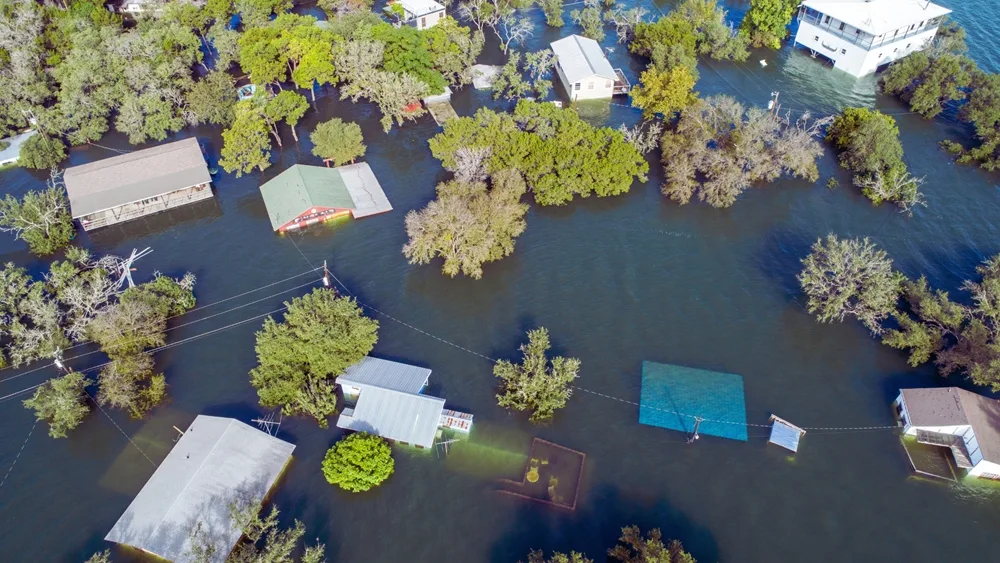
If your factory or warehouse sits in a flood-prone industrial area, a mezzanine floor in a flood zone can do two jobs at once. It adds usable area, and it gives you a place to keep valuable stock and key functions above the water.
But a mezzanine is not a flood solution on its own, and it doesn't guarantee approval or insurance cover. This guide walks through what to check first, what to lift off the ground floor, and who to talk to before you commit.
Start by checking your flood risk
Before you design anything, find out what flooding could actually mean for your site. Flood risk varies from one property to the next, even within the same industrial estate. Your decisions about what to raise, and how high, should start from property-specific information rather than a guess.
Brisbane example: the FloodWise Property Report
If your property is in Brisbane, Brisbane City Council's FloodWise Property Report is the place to begin. It is generated free from Council's Flood Information Online / Flood Awareness Map, and it only covers the Brisbane local government area.
According to Council, the report shows:
- The risk and type of flooding at the property (river, creek, overland flow or storm tide)
- Estimated flood levels for different likelihoods (AEP)
- Historic flood levels, including January 2011 and February 2022 where available
- Minimum habitable floor level requirements
- Whether City Plan flood overlays apply
The report is based on Brisbane City Plan 2014. Council says it is intended to help surveyors, builders, certifiers, architects and engineers plan projects that comply with City Plan.
Defined Flood Level and the Flood Overlay Code
Two terms come up often. The Defined Flood Level (DFL) is the level used for commercial and industrial developments, according to the report's guidance. The Flood Overlay Code guides development of land at risk of flooding within flood planning areas, which set requirements based on flood likelihood, depth and velocity.
Council also recommends engaging a Registered Professional Engineer of Queensland (RPEQ) for professional advice on the report. That advice is worth having before you finalise a layout, because the numbers in the report need to be interpreted for your building and your operation.
If your property is outside Brisbane, your local council will have its own flood information and planning requirements. Ask what's available for your address.
Decide what needs to be above the water
Once you understand the likely flood levels, the question becomes what you can't afford to lose. The list is often shorter than the full ground floor.
Think about:
- High-value or hard-to-replace stock. Items that are expensive, slow to reorder or sensitive to water damage.
- Heavy palletised goods that are costly to relocate. Storing them upstairs from the start avoids a scramble when water is forecast.
- Records, IT and administration. The office functions your business needs to keep running or restart quickly.
- Slower-moving stock. Upper levels suit goods you don't pick every hour, which keeps your fast-moving lines convenient at ground level.
A mezzanine lets you do this while adding capacity, rather than just reshuffling what you already have. Our team can help you map what moves upstairs and how it's accessed. Forklift access, stairs and, where needed, mezzanine goods lifts all affect how practical that upper level will be day to day.
Example: Grevillea Distribution
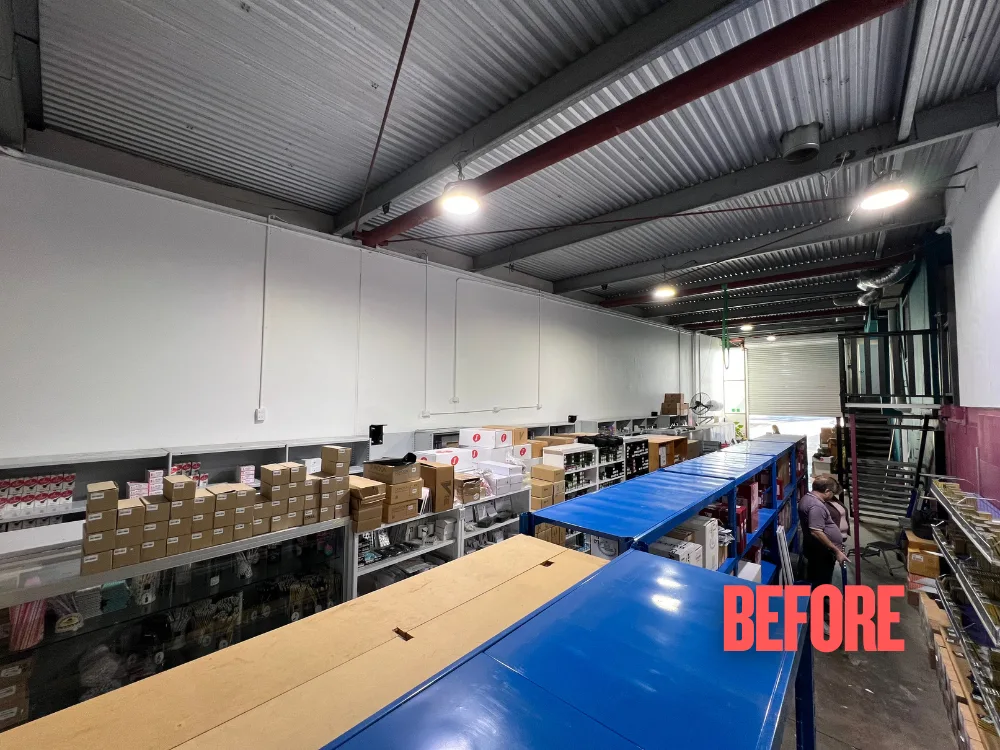
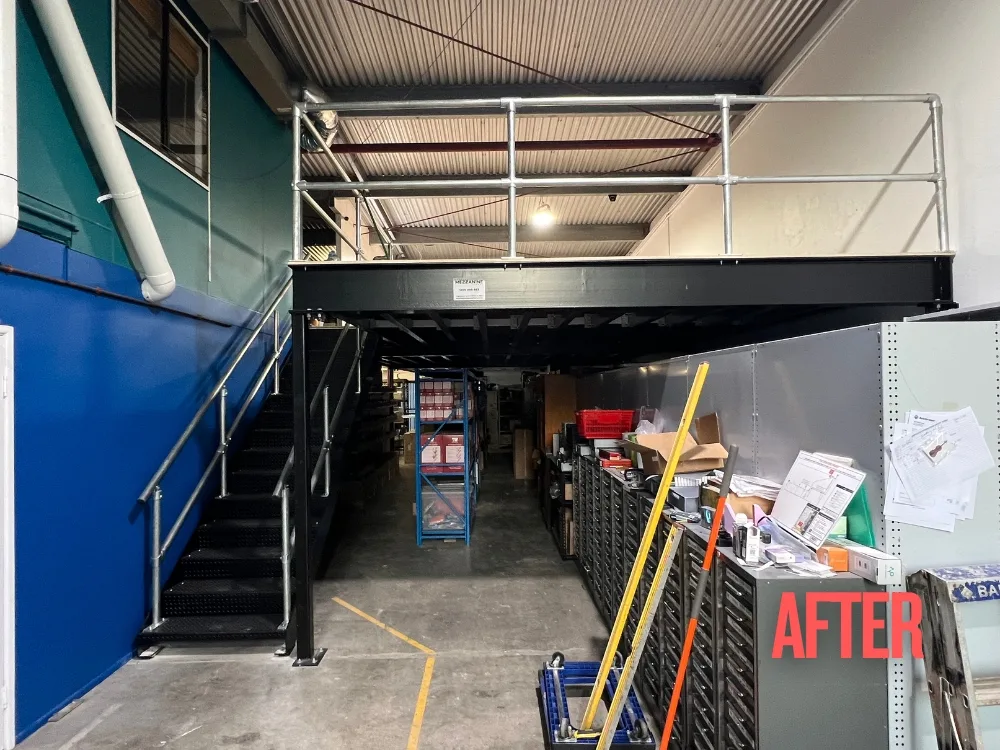
Grevillea Distribution is a Brisbane-based wholesale supplier of woodwind instrument parts. It had outgrown its factory but couldn't relocate, and faced limited ground-level space, structural restrictions and flood-zone compliance requirements. It also needed to expand without disrupting operations.
According to the project page, FMF delivered a custom modular mezzanine that maximised space without downtime, with elevated storage to meet flood compliance and reduce insurance costs. The project also delivered 80% more storage capacity and council-approved additional floor area. You can read the full summary on the Grevillea Distribution project page.
The business's insurer had flagged flood risk, so lifting stock and key operational areas above potential flood levels was part of how the project addressed it. Those outcomes belong to that property and its circumstances. Council conditions and insurer decisions depend on the individual site, so don't assume they will carry over to yours.
Example: a flood-prone facility with offices off the ground
Transport Innovations (The Iceman Group), a national road-transport refrigeration group, moved into a new Brisbane facility in a flood-prone area. FMF designed a 45 m × 6 m structural mezzanine for heavy palletised spares, with an enclosed spare parts department beneath it.
For the administration teams, we built ground-level "mezzanine" offices on a 300 mm raised floor to keep critical admin above the flood line. The works were delivered over roughly six months, including a prolonged wet period, without disrupting operations. See the Transport Innovations/The Iceman Group project for details.
The lesson is that "above the flood line" doesn't always mean a full upper level. Sometimes it means a raised floor, an elevated storage structure or both, depending on what you need to protect.
Talk to your certifier, council and insurer early
A mezzanine is building work, and in a flood-affected area there may be extra layers to consider. Don't leave these conversations until the design is finished.
- Your building certifier or surveyor. They assess your project against the relevant requirements and will confirm what applies to your property. In Queensland, building approvals are issued by a building certifier, as Business Queensland explains on its building certifiers page.
- Your council. Ask about flood planning requirements and overlays for your address. FMF's council approval guidance service can help you work through the process.
- A Registered Professional Engineer of Queensland (RPEQ). In Brisbane, Council recommends one for advice on the FloodWise report.
- Your insurer. Speak to your insurer about what they require and how a change to your storage layout affects your cover. Don't assume a mezzanine will reduce premiums or secure renewal. That is the insurer's decision.
Council's flood-resilient design guidance also notes that building to minimum habitable floor levels required by City Plan or the Queensland Development Code, and using flood-resilient materials, makes construction more flood resilient. Its flood-resilient design and building requirements page is worth reading alongside your report.
Planning the build around the conditions
Flood-prone sites often come with practical constraints too: tight access, existing buildings close by and weather that affects the programme. We plan delivery and installation around site access and the conditions on the day, and for larger projects we can handle full project management so the details are coordinated in one place.
Before you ring anyone, it helps to have these ready:
- Your flood information for the property (the FloodWise report if you're in Brisbane)
- A list of what you want to keep above the water
- Your building's clear height and floor plan
- Any correspondence from your insurer about flood risk
Talk to our team
If you're planning a mezzanine in a flood-prone area, call FMF on 1300 998 883 or request a free, obligation-free site consultation. We'll talk you through the options for your building and what to raise with your certifier, council and insurer.
References
- FloodWise Property Report – Brisbane City Council
- Flood-resilient design and building requirements – Brisbane City Council
- Building certifiers – Business Queensland
FAQs
What should I move upstairs first?
Start with high-value, hard-to-replace stock and the functions your business needs to restart quickly. Then look at heavy goods that are costly to relocate. Keep fast-moving lines where they are easiest to pick.
Will a mezzanine reduce my insurance premium?
It might not. Insurance is the insurer's decision, so speak to yours about their requirements before you plan. At Grevillea Distribution, the elevated storage was part of addressing the insurer's flood concerns, but that outcome was specific to that business.
Does a mezzanine floor guarantee flood compliance or council approval?
No. A mezzanine can help you keep stock and key functions above likely flood levels, but your certifier, council and an RPEQ engineer confirm what applies to your specific property. Approval depends on your site, your design and the flood requirements that apply.
- Mezzanine Floor Maintenance: Maximise Longevity & Safety
- How to Maintain Your Mezzanine Floor for Maximum Longevity
- How to Reconfigure a Mezzanine Floor as Your Business Grows
- Warehouse Layout Ideas with Mezzanine Floors: How to Plan the Zones, Flow and Access
- How a Mezzanine Floor Increased Productivity by 40%
- Buying a Mezzanine Floor: Quoting Mistakes That Cost Businesses Money
- Mezzanine Fire Safety NSW: Approvals, Certifiers and Ongoing Obligations
- Mezzanine Fire Safety Requirements: How the NCC Treats Mezzanines
- Mezzanine Installation Mistakes: What Goes Wrong on Site and How to Avoid It
- Retail Stockroom Mezzanine on the Gold Coast: Free Up Your Shop Floor