
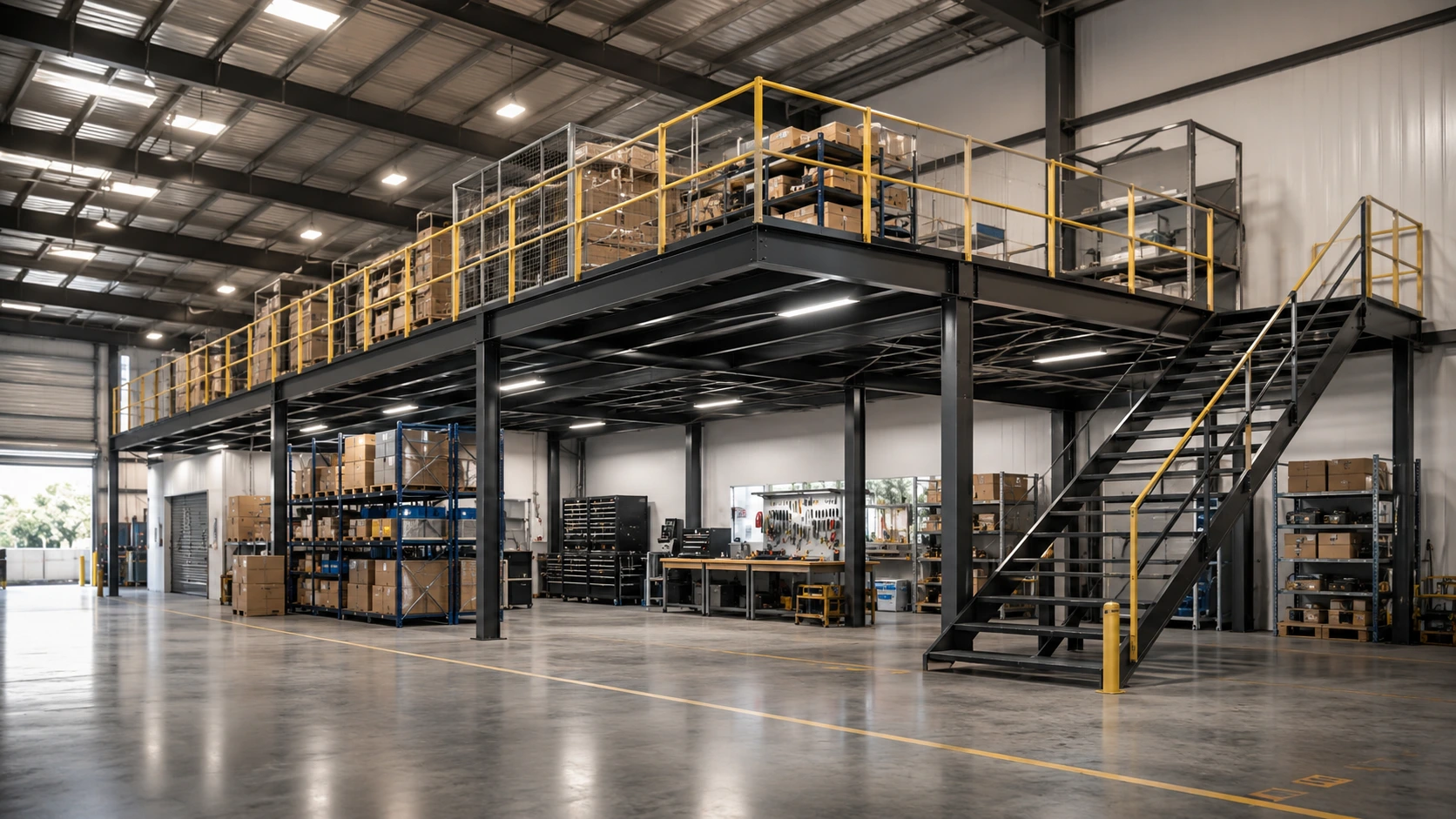
Growing businesses often face the same challenge: running out of usable space. Whether you're operating a warehouse, factory, workshop or commercial facility, limited floor space can quickly affect productivity, organisation and profitability.
Many business owners assume the only solution is relocating to a larger premises. However, moving can be expensive, disruptive and time-consuming. Before committing to higher rent or purchasing a larger property, it's worth considering whether your existing building has untapped vertical space.
A professionally designed mezzanine floor allows businesses to maximise the height of their building by creating an additional level without increasing the building's footprint. This cost-effective solution provides extra storage, office space, production areas or staff facilities while allowing your operations to continue with minimal disruption.
If you're unsure whether it's the right investment, here are five signs your business could benefit from installing a mezzanine floor.
1. Your Floor Space Is Becoming Too Crowded
One of the most obvious signs is when your existing workspace begins feeling cramped.
Perhaps inventory is stacked in walkways, equipment is stored wherever space is available, or employees struggle to move efficiently throughout the building. These issues don't just create frustration—they can reduce productivity and increase safety risks.
Instead of expanding outward, a mezzanine floor makes use of the unused overhead space already available within your building.
Additional floor area can be used for:
- Bulk storage
- Inventory overflow
- Packing stations
- Assembly areas
- Office space
- Staff lunchrooms
By moving selected operations upstairs, your ground floor becomes more organised and efficient.
2. You're Planning to Grow but Don't Want to Relocate
Business growth is exciting, but relocating often comes with significant costs beyond the new lease itself.
Businesses may need to budget for:
- Moving equipment
- Production downtime
- New fit-outs
- Staff disruption
- New council approvals
- Increased rent
Installing a mezzanine floor can provide the extra space your business needs while allowing you to remain in your current location.
For many Australian businesses, this represents a much faster and more affordable solution than moving to larger premises.
It also allows future expansion to occur in stages, helping businesses manage cash flow more effectively.
3. Your Storage Is Becoming Difficult to Manage
Poor storage isn't just inconvenient—it can slow down your entire operation.
If staff spend valuable time searching for stock or frequently rearranging inventory just to make room, your current layout may no longer be meeting your business needs.
A mezzanine floor creates dedicated storage zones that improve organisation and workflow.
Typical storage applications include:
- Archive storage
- Spare parts
- Seasonal inventory
- Packaging materials
- Finished products
- Tools and equipment
Separating storage from production areas often results in faster picking, improved inventory control and safer work environments.
4. You Need More Office or Staff Facilities
As businesses expand, it's common for administrative teams to outgrow their existing office space.
Many warehouses eventually need additional areas for:
- Managers
- Administration staff
- Meeting rooms
- Training facilities
- Lunchrooms
- Change rooms
Rather than sacrificing valuable warehouse floor space, these facilities can often be built on a mezzanine level.
This keeps operational activities downstairs while providing quieter, more comfortable workspaces above.
Modern mezzanine designs can also integrate office partitions, lighting, air conditioning and electrical services to create fully functional work environments.
5. You're Looking for a Better Return on Your Existing Premises
Commercial property is one of the largest operating expenses for many businesses.
If you're already paying for a building with generous ceiling height, failing to utilise that vertical space may mean you're not getting the full value from your premises.
A mezzanine floor increases usable floor area without increasing the building's footprint.
Compared with relocating, businesses often achieve a significantly stronger return on investment because they avoid many of the expenses associated with moving.
The additional space can support:
- Increased production capacity
- Greater inventory levels
- More efficient workflows
- Future business growth
- Improved property functionality
For businesses expecting continued expansion, a mezzanine floor is often one of the most cost-effective long-term investments available.
The Benefits Go Beyond Extra Space
While additional floor area is the main reason businesses install mezzanine floors, the benefits extend much further.
Improved Operational Efficiency
A better organised workplace reduces unnecessary movement, improves workflow and helps staff complete tasks more efficiently.
Clearly defined work zones also minimise congestion and improve day-to-day operations.
Better Workplace Safety
Overcrowded workspaces increase the likelihood of accidents.
Creating dedicated storage and work areas reduces clutter, improves visibility and allows safer movement throughout the facility.
Greater Flexibility
Business requirements change over time.
A professionally designed mezzanine floor can often be configured for different uses as your operations evolve.
Today's storage area may become tomorrow's office space or production area without requiring a complete relocation.
Minimal Business Disruption
Unlike relocating premises, mezzanine installations can often be completed while many businesses continue operating.
This reduces downtime and allows companies to keep serving customers throughout much of the construction process.
Understanding the Return on Investment
Every business evaluates investments differently, but mezzanine floors consistently offer strong long-term value.
Instead of paying substantially higher rent or purchasing larger premises, businesses maximise the building they already occupy.
Potential financial benefits include:
- Delaying relocation costs
- Better use of existing assets
- Increased productivity
- Improved storage capacity
- Higher operational efficiency
- Enhanced property value
Because every project is custom designed, the overall return depends on how the additional space is used and the efficiencies it creates.
For many businesses, the investment pays for itself through improved productivity and reduced operating costs over time.
Why Professional Design Matters
Not every mezzanine floor is the same.
The design should be tailored to your building, intended use and future growth plans while complying with Australian building standards and safety requirements.
A professionally engineered solution considers:
- Building dimensions
- Load capacities
- Stair access
- Safety barriers
- Fire compliance
- Future expansion opportunities
Working with experienced specialists ensures your mezzanine floor performs reliably for many years while supporting your business objectives.
Future-Proof Your Business
Running out of space doesn't always mean it's time to relocate.
For many Australian businesses, installing a mezzanine floor is a practical way to unlock unused vertical space, improve efficiency and prepare for future growth.
Whether you need additional storage, office space, production capacity or a more organised workplace, a professionally designed mezzanine floor can deliver lasting value while helping you maximise your existing premises.
If you've noticed any of these five signs within your business, now may be the ideal time to explore how a custom mezzanine floor can support your next stage of growth.
- How to Maintain Your Mezzanine Floor for Maximum Longevity
- Ways to Reconfigure Your Mezzanine Floor as Your Business Grows
- Before & After: Transforming Warehouse Layouts with Mezzanine Floors
- How a Mezzanine Floor Increased Productivity by 40%
- Common Mistakes to Avoid When Installing a Mezzanine Floor
- Mezzanine Floors vs. Relocation: Which Saves More Money?
- 5 Signs Your Business Needs a Mezzanine Floor
- The Importance of Professional Engineering in Mezzanine Design
- How to Ensure Your Mezzanine Floor Meets Fire Safety Standards in Australia
- How to Ensure Your Mezzanine Floor Meets Fire Safety Standards