
Introduction
In today’s fast-paced logistics environment, warehouses and distribution centres face mounting pressure to maximise efficiency. E‑commerce growth, rising consumer expectations, and the demand for faster fulfilment mean that every square metre counts. One innovative solution that has transformed productivity is the installation of mezzanine floors.
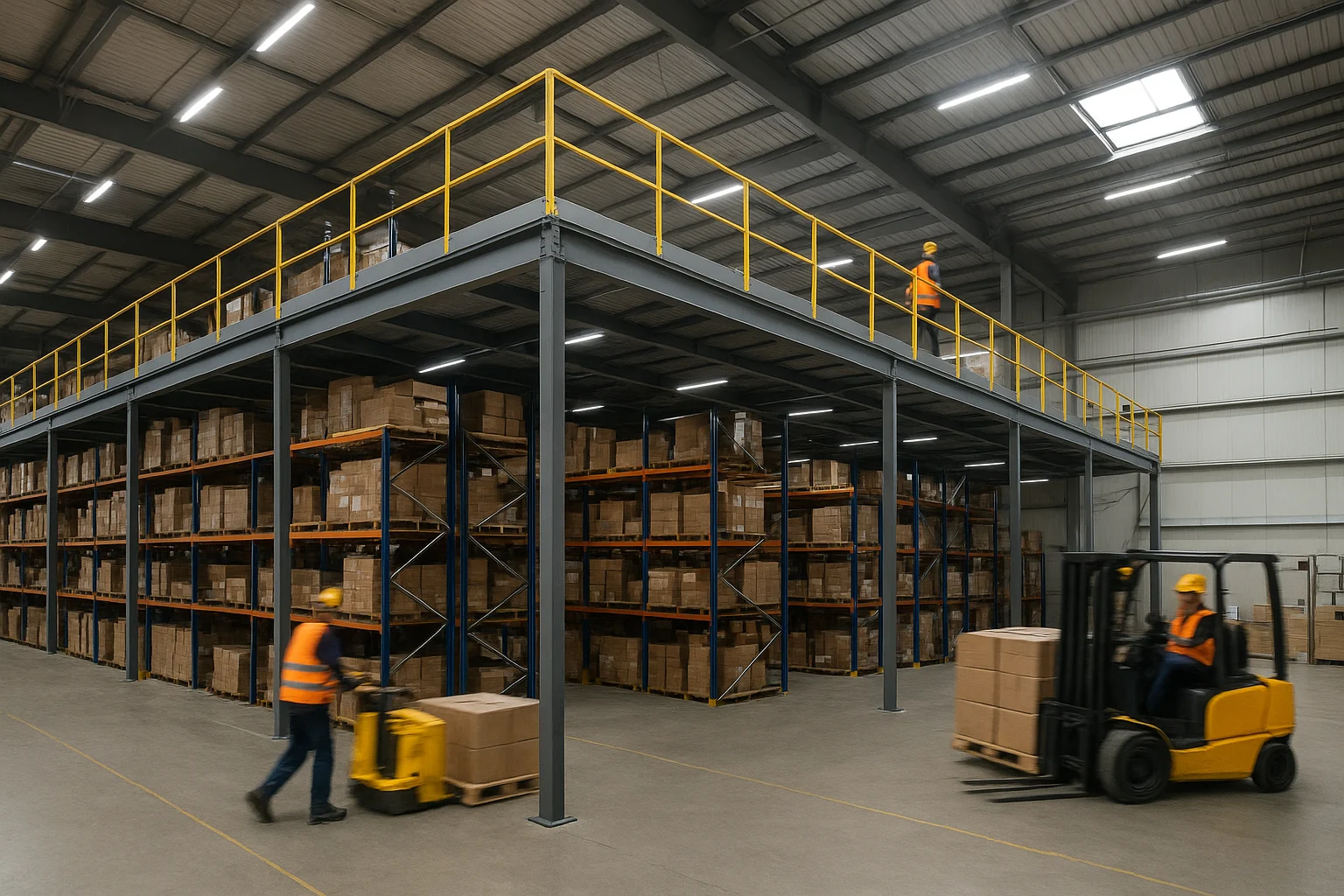
A recent case example illustrates this impact: a large distribution centre implemented a mezzanine floor system, boosting operational productivity by an impressive 40%. By intelligently reconfiguring the facility, the warehouse not only optimised space but also improved workflow, safety, and future scalability.
This article explores how mezzanine floors provide measurable benefits, align with industry trends, and allow warehouses to reconfigure their spaces for maximum efficiency.
The Challenge in Modern Warehousing
Warehouses face several space and operational challenges:
- Space Constraints: Many warehouses have vast square footage but under-utilised vertical space. Without vertical expansion, facilities often overcrowd the ground floor, leading to bottlenecks.
- Workflow Inefficiencies: Mixing storage, picking, and packing on a single floor can increase travel times, slow order fulfilment, and create safety hazards.
- High Costs of Expansion: Horizontal expansion is expensive and may not be feasible due to property limitations or local regulations.
By addressing these challenges, mezzanine floors provide a cost-effective alternative to building additional facilities while improving productivity.
The Solution: Installing a Mezzanine Floor
A mezzanine floor is an intermediate floor installed within an existing warehouse, effectively doubling usable space without moving. In our example, the distribution centre conducted a thorough space audit and engaged specialists to design a custom mezzanine.
Key steps included:
- Space Audit & Layout Design: Assessing current operations and identifying bottlenecks. Zones were designated for picking, packing, and storage, with the mezzanine accommodating high-turnover inventory.
- Structural Design: Determining load capacities, stair placements, lifts, and compliance with local building codes.
- Installation: The mezzanine was installed in phases to minimise disruption, allowing the warehouse to continue operations throughout the process.
- Reconfiguration: The ground floor was optimised for heavy storage and forklift operation, while the mezzanine level facilitated packing and order assembly.
This reconfiguration allowed the facility to separate workflows efficiently, reduce congestion, and fully utilise vertical space.
Benefits Realised
The warehouse saw multiple tangible benefits:
- 40% Increase in Productivity: By separating zones and optimising inventory placement, travel times for workers were reduced. The mezzanine floor allowed high-turnover items to be accessed more quickly, reducing picking and packing times.
- Improved Workflow & Organisation: Clear, dedicated zones enhanced operational efficiency. Staff were able to navigate the warehouse safely without interference from conflicting tasks.
- Better Space Utilisation: Vertical expansion maximised existing warehouse footprints, avoiding the costs associated with leasing or constructing new facilities.
- Future-Proof Flexibility: Modular mezzanine systems allow reconfiguration as business needs change, including seasonal peaks or changes in inventory types.
- Enhanced Safety & Staff Morale: A less cluttered, organised environment reduced errors, accidents, and stress.
- Quick ROI: The investment paid off within 18–24 months due to increased productivity and improved space efficiency.
Industry Trends & Mezzanine Floors
Mezzanine floors align perfectly with several key warehouse and distribution trends:
- E‑Commerce Growth: As online orders rise, warehouses must store and process more items in the same footprint. Mezzanines allow for higher storage density.
- Same-Day Fulfilment & Omni-Channel Operations: Efficient multi-level layouts enable faster access to high-demand items.
- Integration with Automation: Modern mezzanines can accommodate conveyors, lifts, and robotic systems, optimising both human and machine workflows.
- Sustainability & Cost Efficiency: Instead of constructing new buildings, warehouses can increase capacity vertically, reducing material and energy costs.
- Flexible Operations: Modular mezzanine systems allow rapid reconfiguration for seasonal peaks or shifts in inventory, future-proofing the facility against changes in demand.
These trends demonstrate that mezzanine floors are not just a temporary solution but a long-term strategy for warehouses aiming to stay competitive.
Reconfiguration Considerations & Best Practices
To maximise benefits, warehouses should approach mezzanine installation strategically:
- Conduct a Detailed Space Audit: Map current workflows, identify bottlenecks, and determine the ideal mezzanine layout.
- Plan Access & Material Handling: Include stairways, lifts, and conveyor integration to ensure smooth operation.
- Ensure Structural Compliance: Verify load capacities and comply with local building codes. Engage specialists for design and approvals.
- Prioritise Safety: Install guardrails, anti-slip surfaces, and maintain clear pathways. Train staff for operations on multiple levels.
- Future Scalability: Opt for modular designs to allow expansion or relocation as operational needs evolve.
- Minimise Operational Disruption: Plan installation in phases, potentially during off-peak hours, to maintain ongoing productivity.
Following these best practices ensures the mezzanine floor provides lasting benefits and avoids operational interruptions during construction.
Conclusion
Warehouses and distribution centres face relentless pressure to increase efficiency while optimising space. Installing a mezzanine floor offers a cost-effective, scalable, and practical solution.
Our example demonstrated a 40% productivity improvement through careful reconfiguration, better workflow organisation, and enhanced space utilisation. The benefits extend beyond productivity—safety, employee satisfaction, and future adaptability also improve.
For warehouses looking to keep pace with growing demand, embracing mezzanine solutions is a clear path to higher efficiency and smarter operations. Partnering with a specialist like Factory Mezzanine Floors ensures the project is designed, approved, and installed for maximum impact.
FAQs
Where Does Your Business Operate?
We deliver Custom mezzanines across Queensland including Brisbane, Gold Coast, Sunshine Coast, Toowoomba, Ipswich, Logan, Redlands, Bundaberg, Baringa, Coolum, Cooyroy, Redbank, Yatala Rockhampton, Mackay, Townsville, Cairns and regional QLD.
What mezzanine load ratings can you design for (office vs palletised storage)?
We design to your use case—office live loads through to heavy palletised storage—engineered to AS/NZS 1170 and documented in your certification pack.
Do I need engineering if it’s just for storage?
Yes. Every mezzanine—regardless of use—must be structurally certified for safety, compliance, and long-term use.
Can the design allow for future expansion?
Yes. We can design your mezzanine for future expansion.
- How to Maintain Your Mezzanine Floor for Maximum Longevity
- Ways to Reconfigure Your Mezzanine Floor as Your Business Grows
- Before & After: Transforming Warehouse Layouts with Mezzanine Floors
- How a Mezzanine Floor Increased Productivity by 40%
- Common Mistakes to Avoid When Installing a Mezzanine Floor
- Mezzanine Floors vs. Relocation: Which Saves More Money?
- 5 Signs Your Business Needs a Mezzanine Floor
- The Importance of Professional Engineering in Mezzanine Design
- How to Ensure Your Mezzanine Floor Meets Fire Safety Standards in Australia
- How to Ensure Your Mezzanine Floor Meets Fire Safety Standards